The Patient Journey – from scene to hospital: Part 2
April 14, 2026
Our public access defibs: saving lives across Bristol
April 14, 2026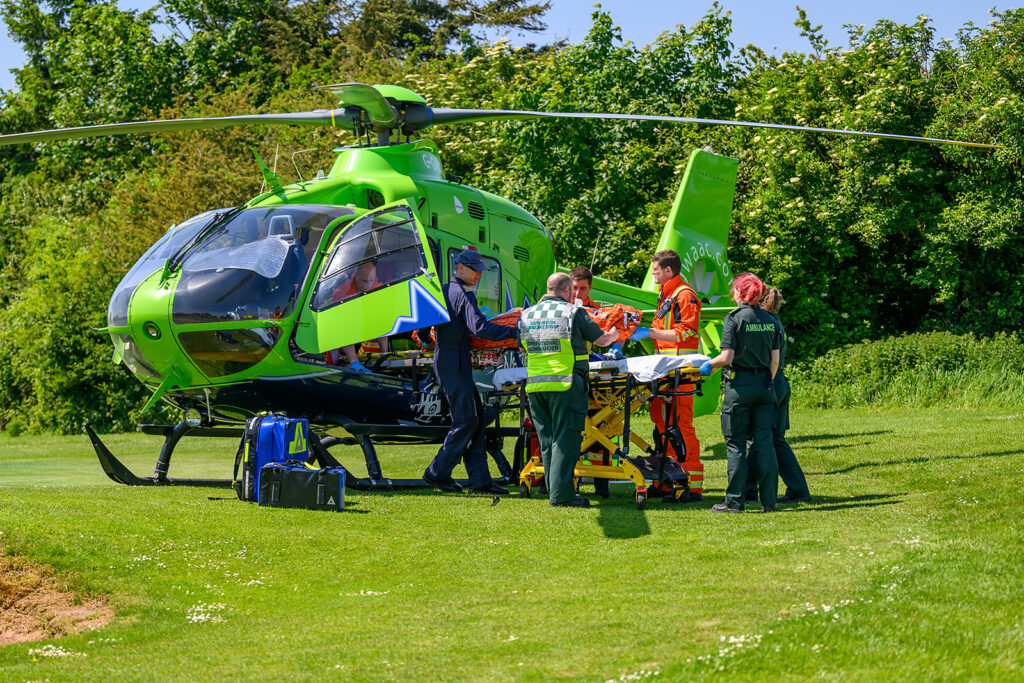
Part 1: What really happens at scene
Welcome to our four-part series on the patient’s critical care journey from the scene of an incident through to the hospital Emergency Department by air. It’s a journey we hope we won’t need to make in our lifetime, but the reality is that each day it’s likely someone will.
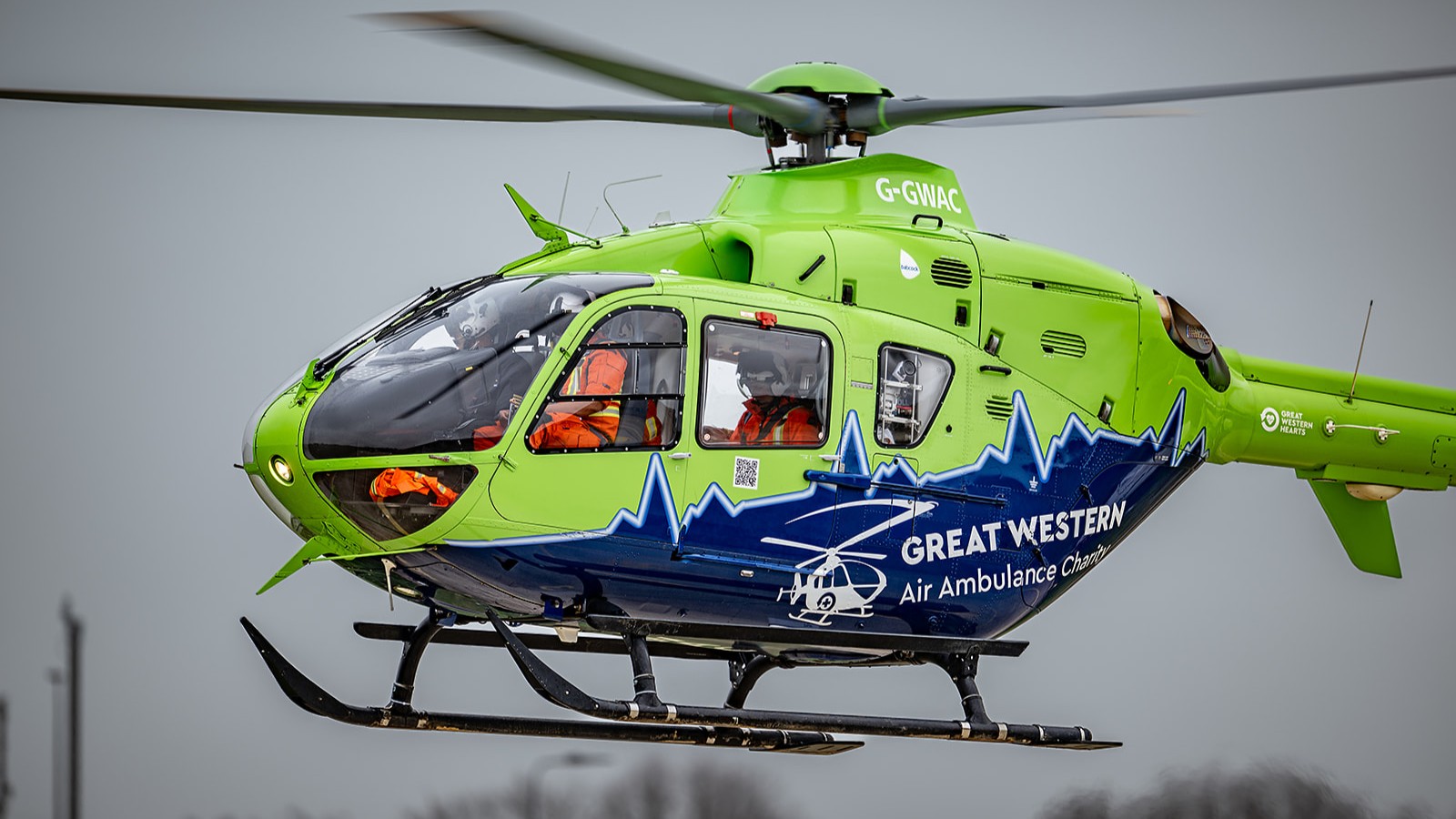
Have you ever looked up to see our bright green and blue helicopter and wondered who’s in it, where they’re going and what happens next?
Planning the journey and transporting a patient to an Emergency Department by air takes a coordinated team effort. Not just from GWAAC’s crew and Pilot, but from the Helicopter Emergency Services (HEMS) Desk in Exeter and different teams at the receiving hospitals. Across this series, we explore:
- What happens at scene
- What happens in the air
- What happens next, at the hospital
- A day in the life of a hospital Helideck Supervisor
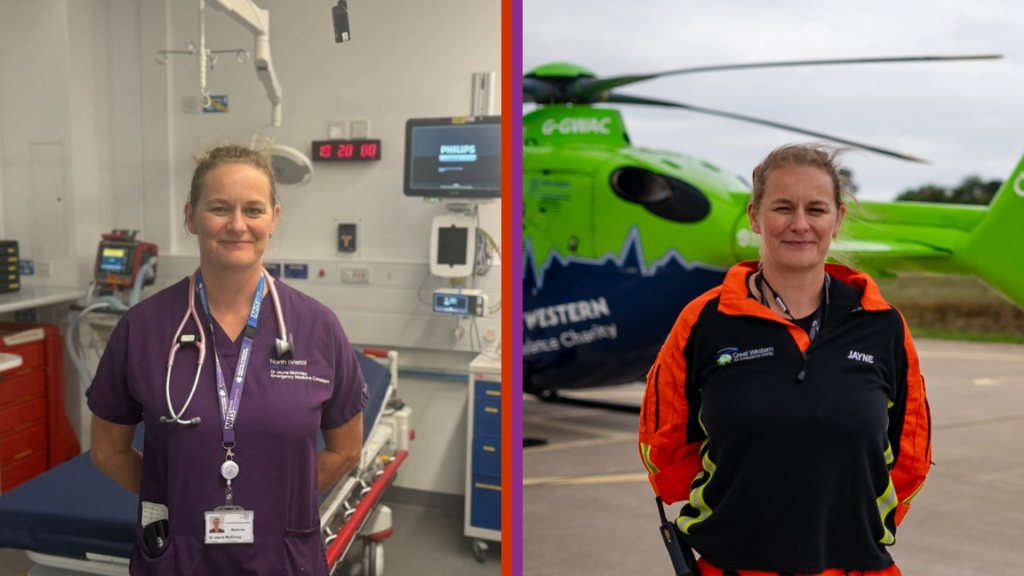
With thanks to Critical Care Doctor, Chris Arrowsmith, and Specialist Paramedic in Critical Care (SPCC), Fleur Rath, for their insight into what happens at scene.
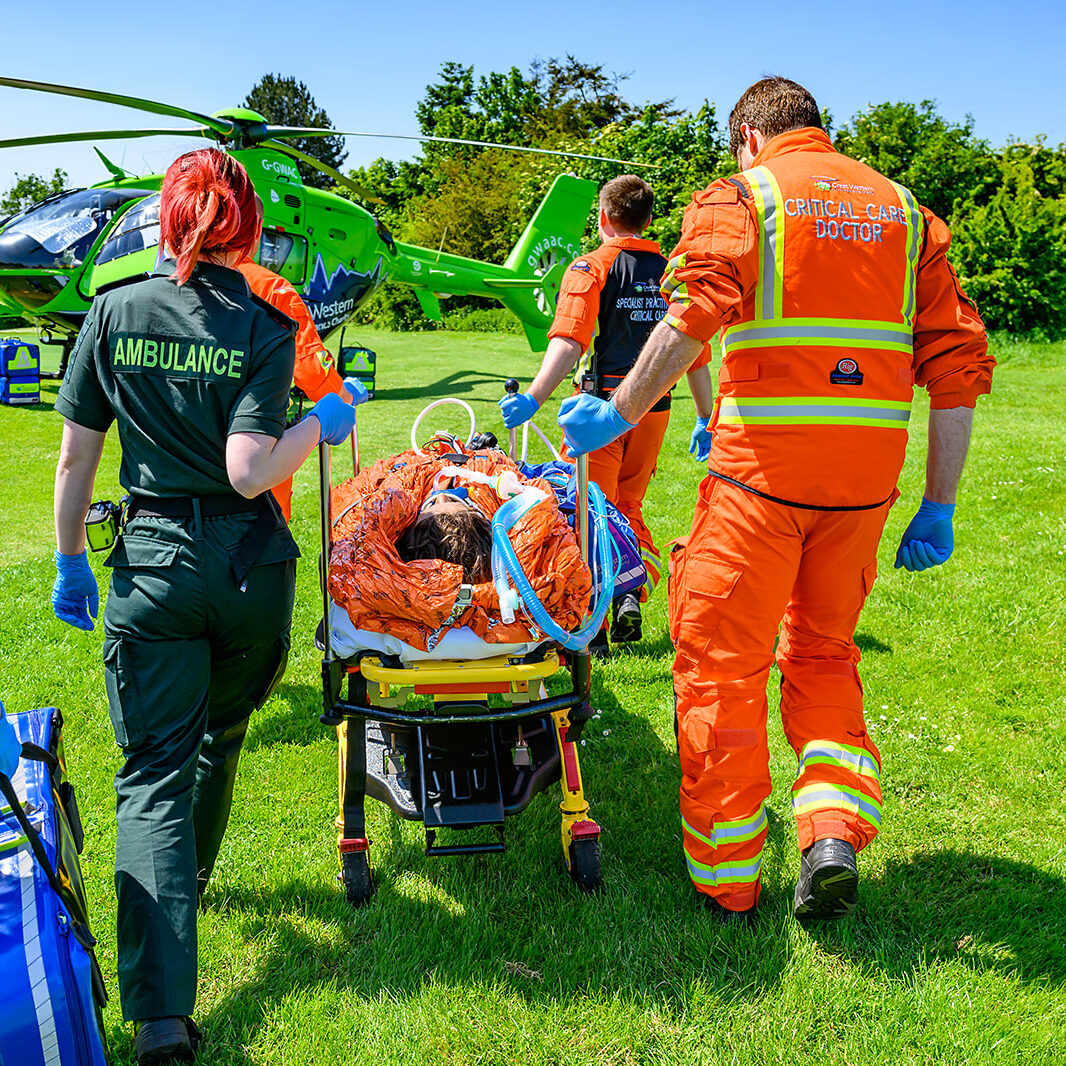
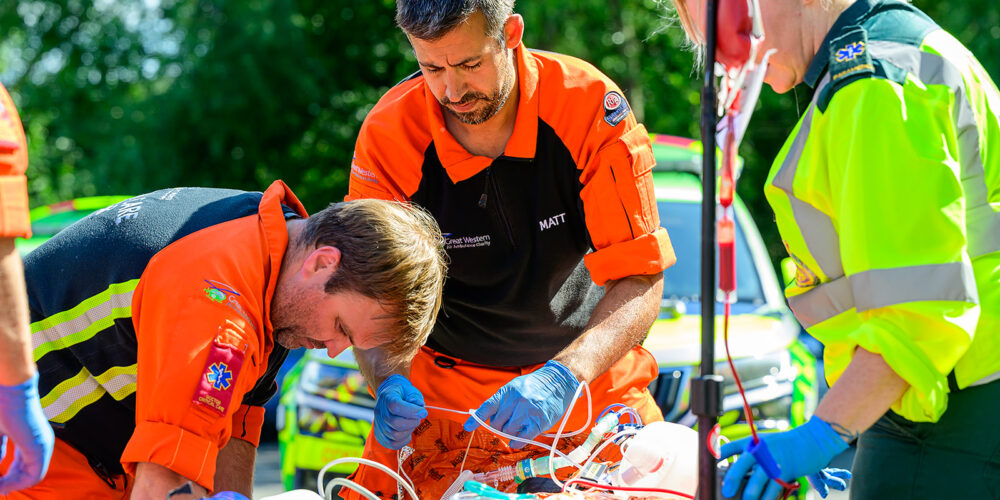
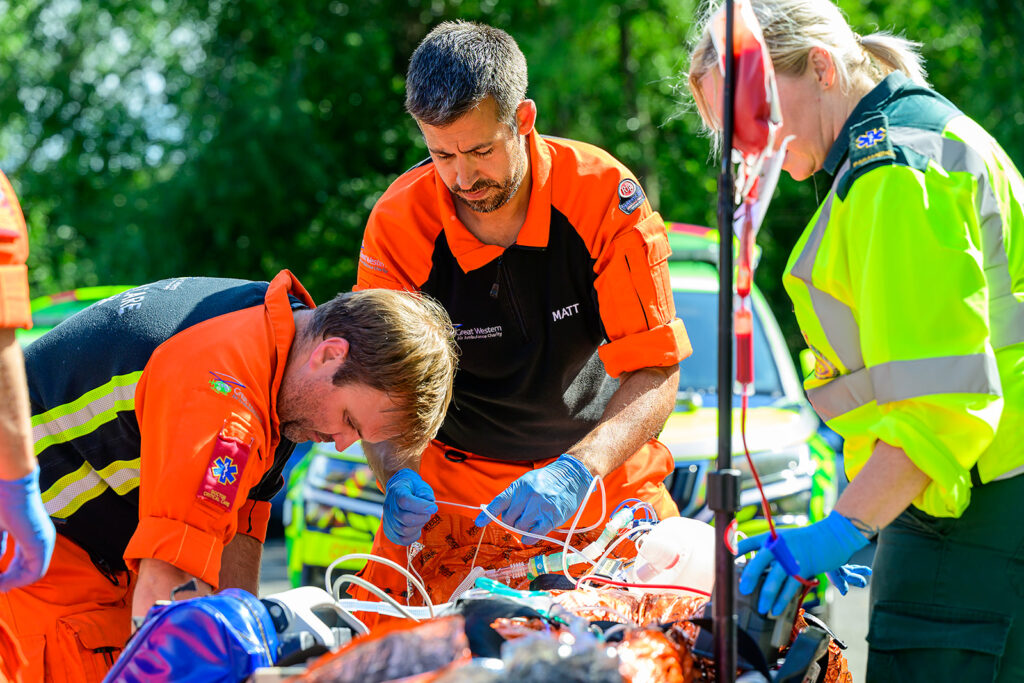
Picture this, our crew at scene with a critically ill patient…
Our specialist crew are at the scene of an incident. They have assessed the patient and started treatment. Early in this process, they have been thinking about which hospital the patient needs to go to and how they are going to get them there.
Dr Chris Arrowsmith explains:
“Whether we fly depends often on whether the patient is awake or asleep. If they're asleep (intubated and aneasthetised), we’re more likely to fly. We need them to be as stable as possible because we don’t have much room to treat them in the back of the helicopter. If the patient needs further treatment en route, it's much easier to pull an ambulance over and do something to help than it is in the back of a helicopter.
We think about how far away the hospital is and how quickly we can get there by road or air and how long it might take to unload a patient on a helipad or helideck and take them from the helicopter into the Emergency Department. At the Bristol Royal Infirmary for example, it takes ten minutes to shut the engine down and get the patient and equipment out of the helicopter and down to the Emergency Department. It's usually two or three minutes if we come in an ambulance.
The flip side is the helicopter is a lot faster and can go over all the traffic. So, you have to balance all those things up and look at them in relation to where you are taking the patient.”
Factors to consider when deciding whether to fly a patient:
- Type of injury or illness
- Which hospital best suits their needs
- How stable the patient is
- Weather
- Location
- Traffic
- Loading and unloading time
Deciding which hospital to go to
Which hospital the patient goes to depends on their injury or illness. We’re lucky that GWAAC has two Major Trauma Centres (MTC) in our region – Southmead Hospital is the MTC for adult injuries and Bristol Children’s Hospital is the MTC for children under 16 years old.
Bristol is also home to the Bristol Royal Infirmary and the Bristol Heart Institute, which is where our crew take most patients who have suffered a cardiac arrest. Dr Chris says, “When we’re at scene, we discuss the best plan together; it’s usually quite obvious from early on, which hospital would be best for the patient’s individual needs.”
Learn more about when our crew would fly or drive, from the Pilot’s perspective.
They decide to fly, what next?
SPCC Fleur says, “If we decide to fly, we tell the Pilot first, so they can re-roll the helicopter ready to take-off again with a patient on board. We can often tell early on if we’ll need to fly, either because of the location or what has happened to the patient.”
Pilot tasks
- Remove any remaining kit bags from the stretcher
- Get the stretcher out with a blizzard blanket to keep the patient warm
- Turn the oxygen on in the helicopter in readiness for the patient (oxygen is turned off unless a patient is on board)
- Call the hospital helideck or helipad teams to notify them that GWAAC is coming in
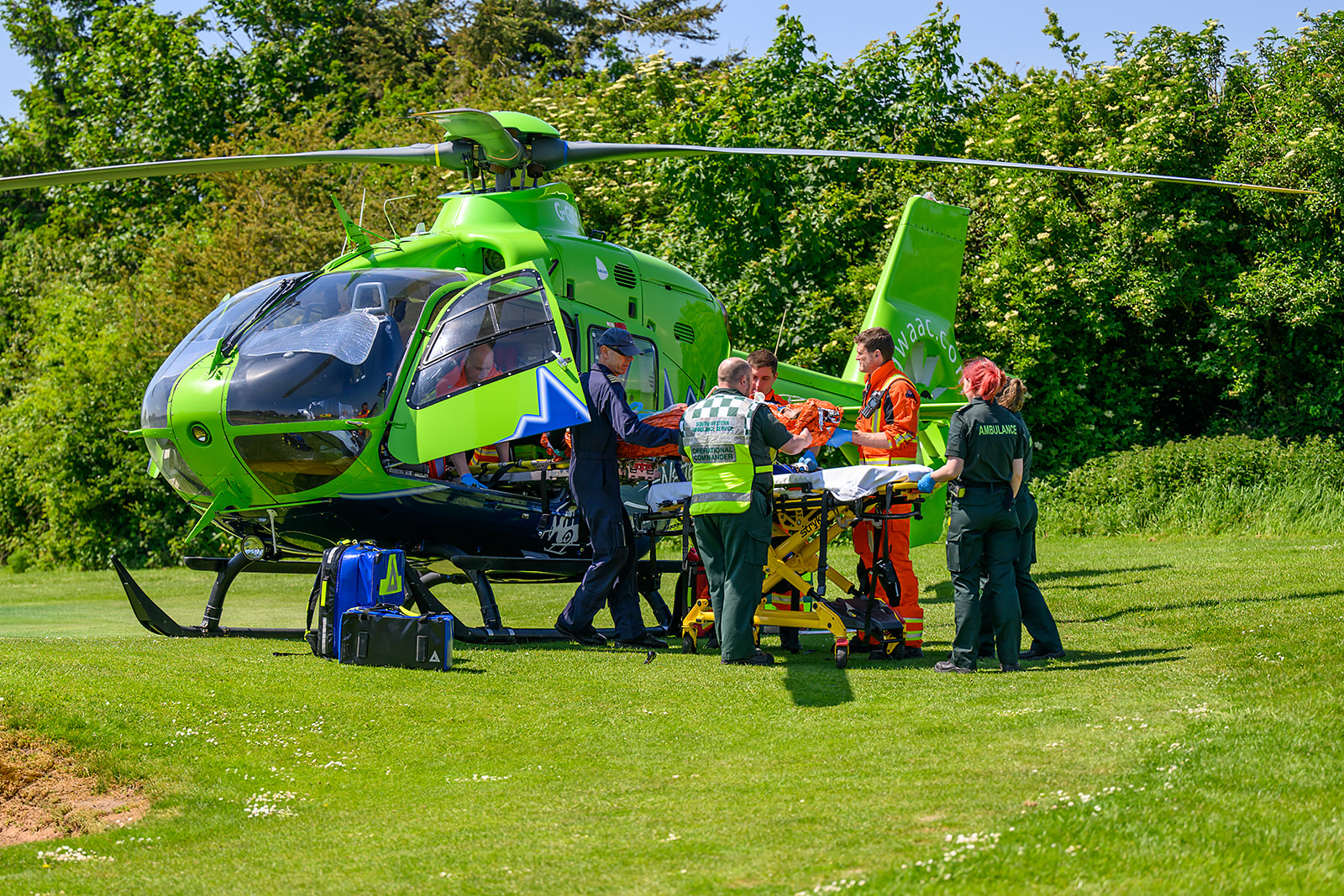
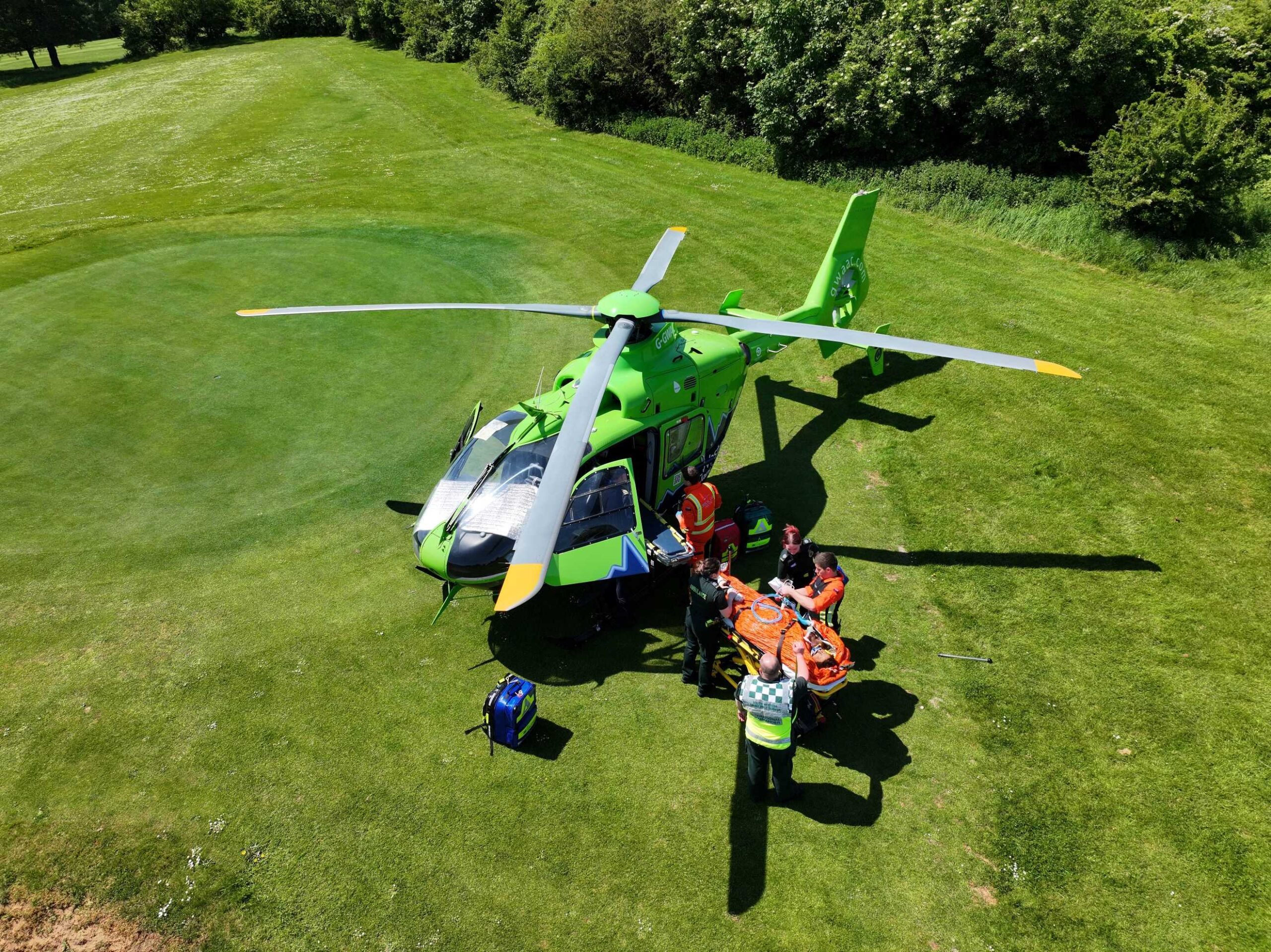
- Oversee the loading of the patient onto the helicopter
SPCC Fleur says, “It’s a massive team effort, loading the patient onto the helicopter; there’s a lot that goes with them, including the ventilator, the monitor and other emergency equipment. The Pilot will oversee this because he’s looking at the whole picture including from a safety perspective, whereas we are more focused on the clinical side of things.”
Clinical team tasks
- An SPCC will communicate with the Pilot and the clinical team, about equipment needed and progress at scene
- One of the team will gather the equipment needed to travel with the patient
- One of the team will call the receiving hospital and speak to the Trauma Team Leader (TTL) to confirm they’re coming by air and the expected arrival time. They’ll also provide details of the patient’s illness or injury and treatment given
- An SPCC will call the HEMS Desk to update them on the status of the patient and what they’ve done to treat them so far. They’ll advise that they’ve given the hospital a pre-alert to their arrival
- At the final stage of loading the patient into the helicopter, the crew member leading the clinical side will check that the necessary equipment is hooked up and secure in the helicopter
Kit needed for in flight
To prepare for the patient’s journey in the air, the crew hang the ventilator and monitor on a bracket on the inside wall of the helicopter. They also grab any emergency kit pouches and equipment they might need for that patient, including blood and medication. The main kit bags are then loaded into the front footwell of the helicopter.
The moments before take-off
With the patient safely strapped to the stretcher and secured in the helicopter, and the emergency kit easily to hand, the crew take up their seats.
Final safety checks are carried out by the Pilot and the Technical Crew Member (TCM) (a TCM is a trained SPCC who assists the Pilot with aircraft duties and navigation), before lifting off for the hospital.