Our public access defibs: saving lives across Bristol
April 14, 2026
9 things you may not know about helicopters arriving at hospital
April 16, 2026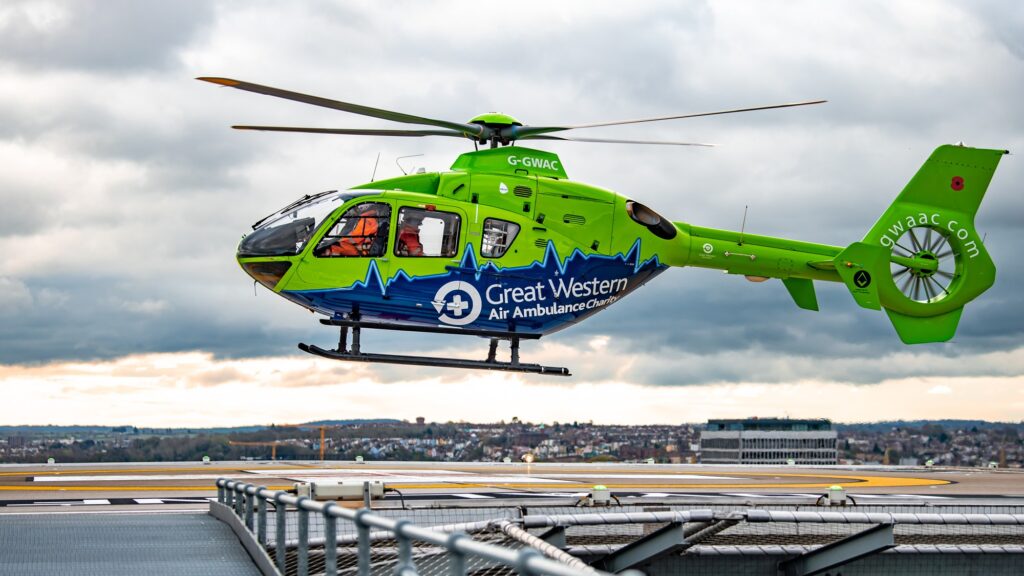
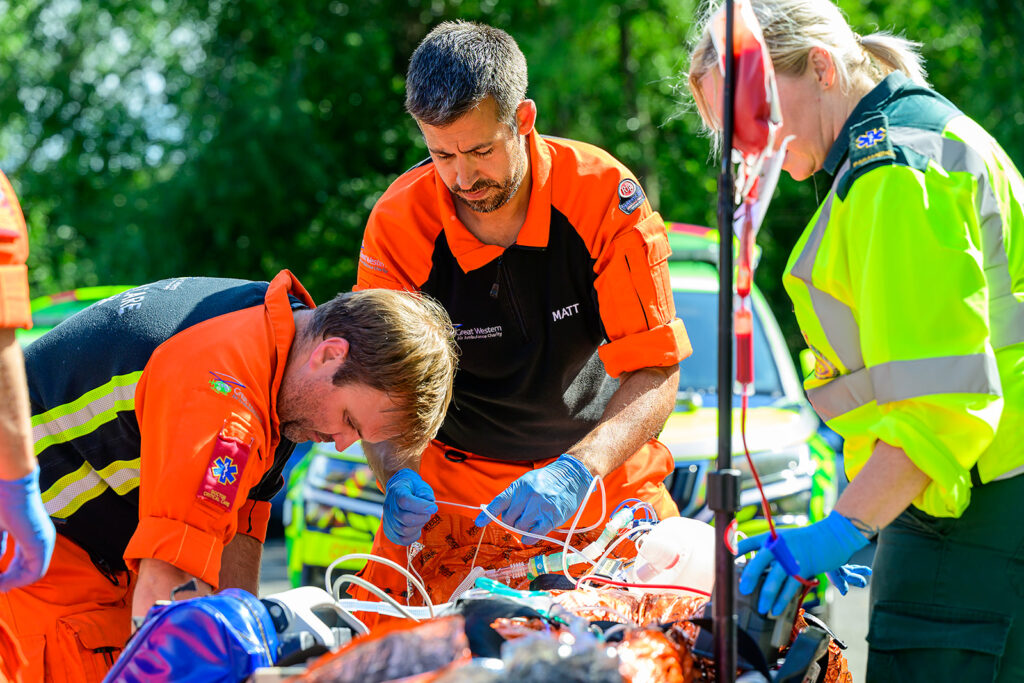
At Great Western Air Ambulance Charity (GWAAC), we bring the skills and equipment of a hospital Emergency Department to our patients. This means we can stabilise many of them where their incident or medical emergency happened. But sometimes, they require constant and ongoing care. When they do, our crew will stay with them and take them to the hospital best suited to their needs, either by air, or more commonly, in a land ambulance.
How many patients do we take to hospital?
In 2025, around a third of the 2,344 patients we were called to were taken to hospital by our Critical Care Team. Each call-out we attend is unique, and our patients have varying needs. Often, our crew provide vital interventions at the scene, stabilising the patient enough for a land ambulance crew to transport them to hospital. However, sometimes this isn’t the case, and our crew need to stay with the patient as they travel to hospital.
Deciding whether to fly or drive patients to hospital
Our helicopter is used to respond to roughly a quarter of patients, while three quarters of missions are attended by critical care car. But even when we travel by helicopter, there is still a decision to be made about whether we take a patient to hospital by air or road. There are a variety of factors that contribute to this decision, such as location, the length of time it will take to transport the patient, and their condition. While it may seem quicker to fly a patient, we must consider the extra time it takes to securely and safely move them from the scene of their incident and into the helicopter.
Also, if a patient is in a serious condition that requires ongoing treatment en route to the hospital, a land ambulance has more room for our crew to work, as well as the ability to stop easily at the side of the road for treatment to take place.
Choosing the right hospital
In our region, we are lucky to have Major Trauma Centres (MTC) and specialist cardiac hospitals on our doorstep. This means we are often within driving distance of the best hospitals for our patients’ needs and these are the hospitals we travel to most often. Here are the five hospitals we take patients to most often:
1. Southmead Hospital
patients taken to Southmead Hospital in 2025
of patients taken to hospital were taken to Southmead Hospital
Nearly half of the patients we took to hospital in 2025 were taken to Southmead Hospital. It is the South West’s adult MTC. This means that because we attend the most serious 999 calls in our region, many of our patients require the specialist treatment and skills available there. Around three in five patients taken to Southmead are trauma cases.
The idea is that major trauma is not that common and so taking the patient to centres that specialise in trauma should improve outcomes.

Helimed 65 at Southmead Hospital
2. The Bristol Royal Infirmary (BRI)
patients taken to the BRI in 2025
of patients taken to hospital were taken to the BRI
The BRI is also home to the Bristol Heart Institute. This means we can convey our cardiac arrest patients directly to a specialist hospital that is best prepared to treat their condition. Cardiac arrests are the most common type of incident our crew respond to, making up over a fifth of all our missions. Of the 173 cardiac arrest patients we took to hospital in 2025, more than 60% were taken to the BRI.

Helimed 65 on top of the BRI helideck
3. Gloucestershire Royal Hospital
patients taken to the Gloucestershire Royal Hospital in 2025
of patients taken to hospital were taken to the Gloucestershire Royal Hospital
In 2024, changes were made to Gloucestershire Royal Hospital as part of NHS Gloucestershire’s Fit for the Future programme. These changes have contributed to an increase in the number of patients we take to the hospital. In 2023, we took just 26 patients there, with that number rising to 94 in 2025.
With Gloucestershire being the area of our region we were called to most in 2025, it’s great to have a hospital in the county like the Gloucestershire Royal Hospital. 83% of patients taken to the hospital were medical emergencies.

Landing at the Gloucestershire Royal Hospital
4. Bristol Royal Hospital for Children
patients taken to Bristol Royal Hospital for Children in 2025
of patients taken to hospital were taken to Bristol Royal Hospital for Children
Bristol Royal Hospital for Children is the South West’s MTC for children. The hospital is geared to provide the best possible for care for children, with clinicians who have specialist skills in treating smaller patients.
There’s a common misconception that air ambulances only respond to adults. The reality is very different. 15% of our call-outs in 2025 were to babies, children and teenagers. When someone in this age group needed to be taken to hospital by our crew, 65% were taken to the Bristol Royal Hospital for Children. On six occasions, we conveyed children to this hospital in our helicopter.
One example of a child who required the specialist skills of the Bristol Royal Hospital for Children is Albie. We treated him at his home in 2024, when he was just three-days-old, before taking him to hospital by land ambulance.

Did you know that the BRI and the Bristol Royal Hospital for Children both share the same helideck?
5. Royal United Hospital (RUH) Bath
patients taken to the RUH in 2025
of patients taken to hospital were taken to the RUH
As the air ambulance for Bath and North East Somerset (B&NES) and parts of Wiltshire, we occasionally take our patients to the RUH. Of the 75 patients from B&NES and Wiltshire that we took to hospital last year, a quarter were taken to the RUH.

The RUH captured from on board Helimed 65
Other hospitals
patients taken to other hospitals in 2025
of patients taken to hospital were taken to other hospitals
We don’t just fly to the above five hospitals though. Whether they are other hospitals within our region such as Weston General Hospital and Cheltenham General Hospital, or major hospitals outside our region such as John Radcliffe Hospital in Oxford or University Hospital Wales in Cardiff, we took patients to 11 other hospitals in 2025. This can be for a variety of reasons, such as being called to a patient outside of our usual region, or depending on the patient's needs.

Helimed 65 taking off at the John Radcliffe Hospital in Oxford (@jfowler_photo)