9 things you may not know about helicopters arriving at hospital
April 16, 2026
What rising aviation fuel costs mean for Great Western Air Ambulance Charity
April 21, 2026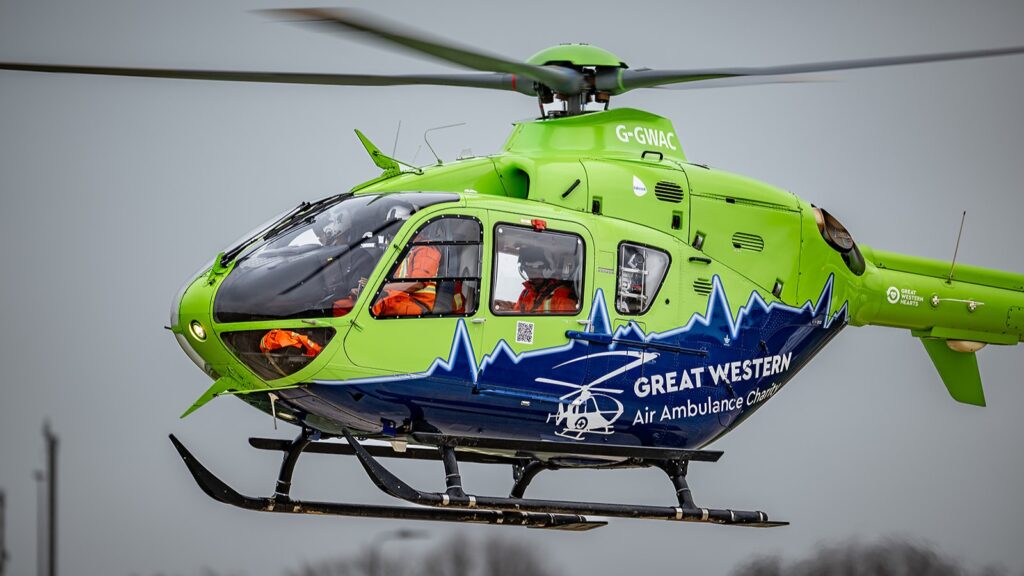
Air ambulances are usually associated with speed, and many people assume the primary purpose of the helicopter is to get patients to hospital as quickly as possible.
But that’s only part of the picture.
In reality, our crew is making constant decisions about how, where and whether to respond, all based on what gives each patient the best chance of receiving the right care.
Some of what happens is visible when a helicopter lands. But much of what happens during an emergency is decided before arrival (and it isn’t always what people expect).
Here are seven common myths about air ambulances, and the reality behind them:
1. Myth: Every critical care job involves a helicopter
Reality: Not every mission requires the helicopter.
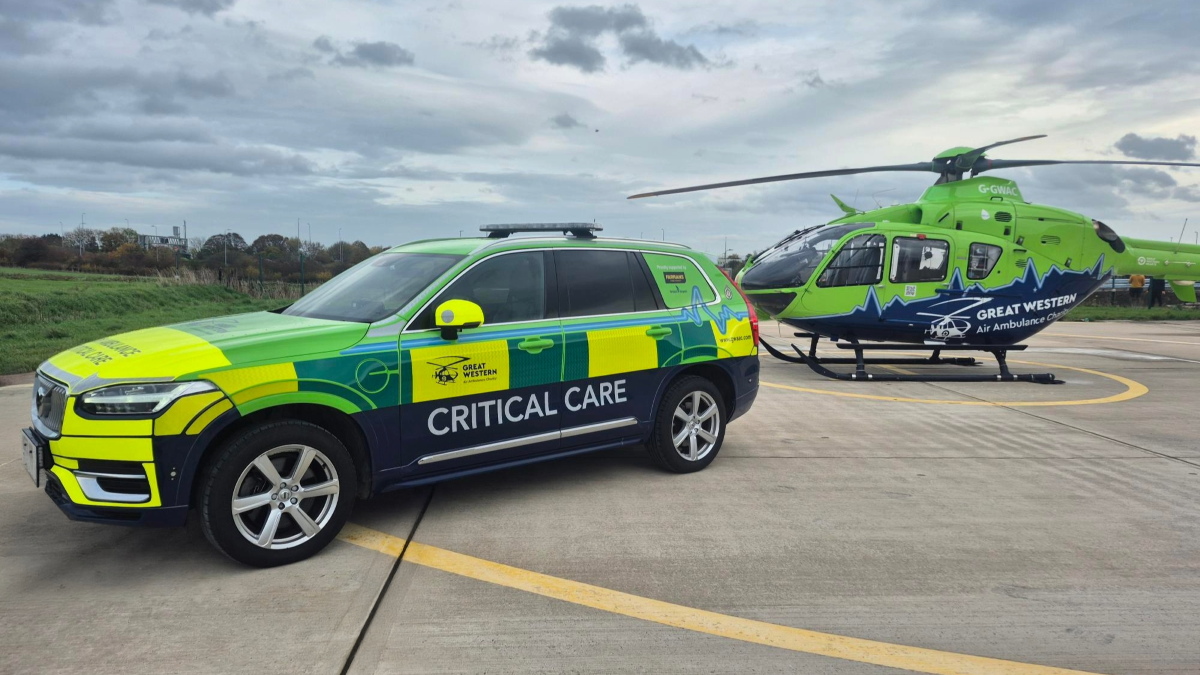
In 2025, around 74% of our missions were responded to by car and around 94% of patients we travelled with to hospital, were transported by road ambulance.
In many cases the helicopter is used to reach the scene quickly, with the patient then travelling by road with our crew so treatment can continue safely.
The safest and most appropriate option is always the priority.

2. Myth: The helicopter always goes to the nearest hospital
Reality: Patients are taken to the most appropriate hospital for their clinical needs, not the closest.
That may be a Major Trauma Centre, specialist heart unit, or children’s hospital, depending on the patient and what has happened to them.
The people we treat often need specialist care that isn’t available at all hospitals. As a result, we take patients directly to these specialist hospitals rather than the nearest Emergency Department, to ensure they receive the right care as quickly as possible.
In 2025, 46% of patients we transported to hospital were taken to Southmead Hospital, and 24% to the Bristol Royal Infirmary.

3. Myth: Air ambulances are always faster than travelling by road
Reality: Not always.
Sometimes road is quicker depending on distance, access to the patient, weather conditions and which hospital the patient needs.
Our crew choose the fastest safe option, not just the fastest mode of transport.
4. Myth: Air ambulances only respond to major trauma
Reality: They respond to a wide range of serious medical emergencies — not just trauma.
This includes cardiac arrests, collapses and neurological emergencies such as strokes or seizures, where quick access to critical care is vital.
In fact, around 14% of the patients we flew to hospital in 2025 had suffered a cardiac arrest.

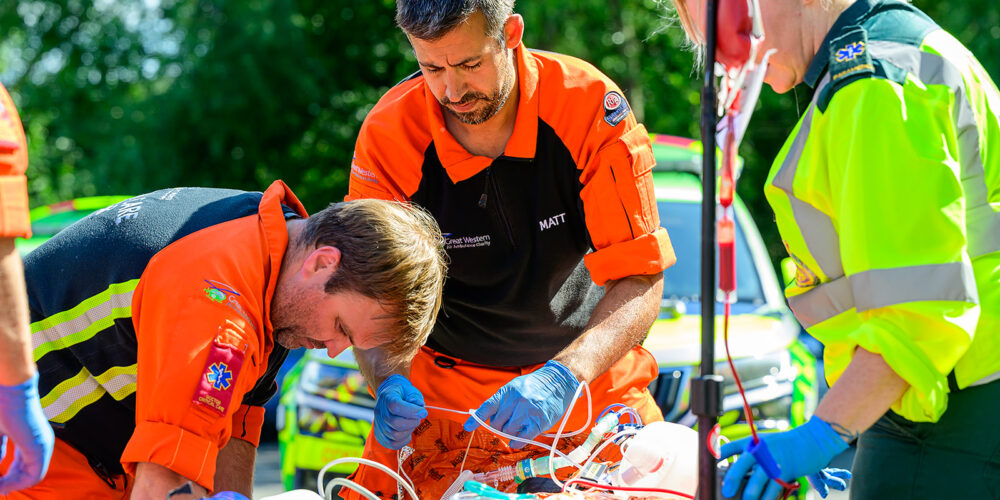
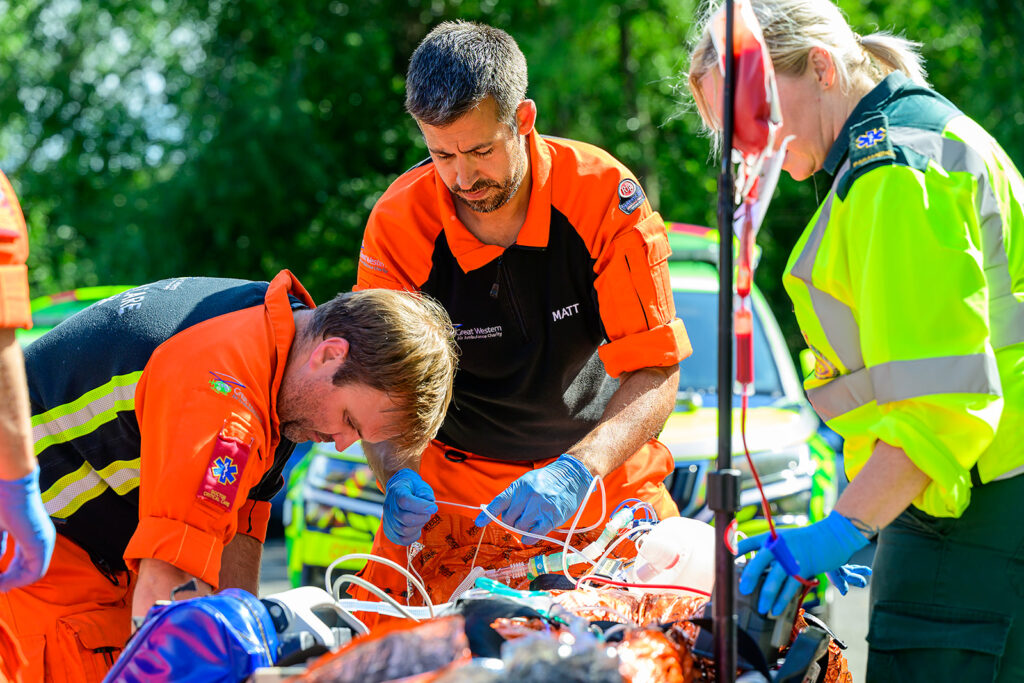
Simulation image
5. Myth: When a helicopter lands at hospital, it always means a patient is onboard
Reality: Not always.
Sometimes the helicopter is collecting the clinical team after they have accompanied a patient to hospital by road ambulance.
In 2025, on 170 occasions our crew travelled to the scene by helicopter but then escorted the patient to hospital by road, meaning the helicopter landed at the hospital to collect the crew.

6. Myth: The helicopter is the most important part of the response
Reality: The helicopter is one part of a wider system of care.
The crew onboard, the specialist equipment, other emergency services at scene, hospital teams, and dispatch systems all play vital roles.
Speed matters, but only in the context of delivering the right care, in the right way, at the right time.

7. Myth: If a patient isn’t put on the helicopter, the air ambulance wasn’t needed
Reality: This is one of the most common misunderstandings.
Only around one in ten patients we attend by helicopter are flown to hospital.
The helicopter is used to get our Critical Care Team and equipment to the patient quickly so treatment can begin on scene. Often, our crew will provide care and stabilise their patient to a point that land paramedics can continue and take the patient to hospital. When we need to travel with them, if the safest option is for the patient to travel to hospital by road with our crew, that’s what happens.
The helicopter is used in the way that best supports the patient’s care, not just as transport to hospital.

Air ambulances are often seen through the lens of speed and visibility — a helicopter arriving, a patient being transferred, and the journey to hospital.
But the reality is more complex than that.
Every decision is based on clinical need, safety and getting the right care to the patient in the right way, whether that involves flying, driving or a combination of both.
What you see is just one part of a much wider system working behind every call-out.