The Patient Journey – from scene to hospital: Part 3
April 14, 2026
The Patient Journey – from scene to hospital: Part 1
April 14, 2026
Part 2: What really happens in the air
Welcome to part two of our four-part series following the patient’s critical care journey from scene to Emergency Department by air.
In part one we explored how our crew make decisions at the scene of an incident, including whether to fly or drive a patient to hospital. We also looked at what the crew and Pilot do next, which includes preparing the patient for transfer to notifying the receiving hospital ahead of arrival.
In this post, we focus on what happens during the flight itself, including:
- How the patient is looked after during the flight
- How our Pilot and crew do prepare for landing
- How the hospital helideck team prepares for an air ambulance landing
With thanks to Critical Care Doctor, Chris Arrowsmith, Specialist Paramedic in Critical Care (SPCC) Fleur Rath and Bristol Royal Infirmary Helideck Supervisor, Andrew Williams, for the insight into what happens during this stage of the journey.
Looking after patients in the air
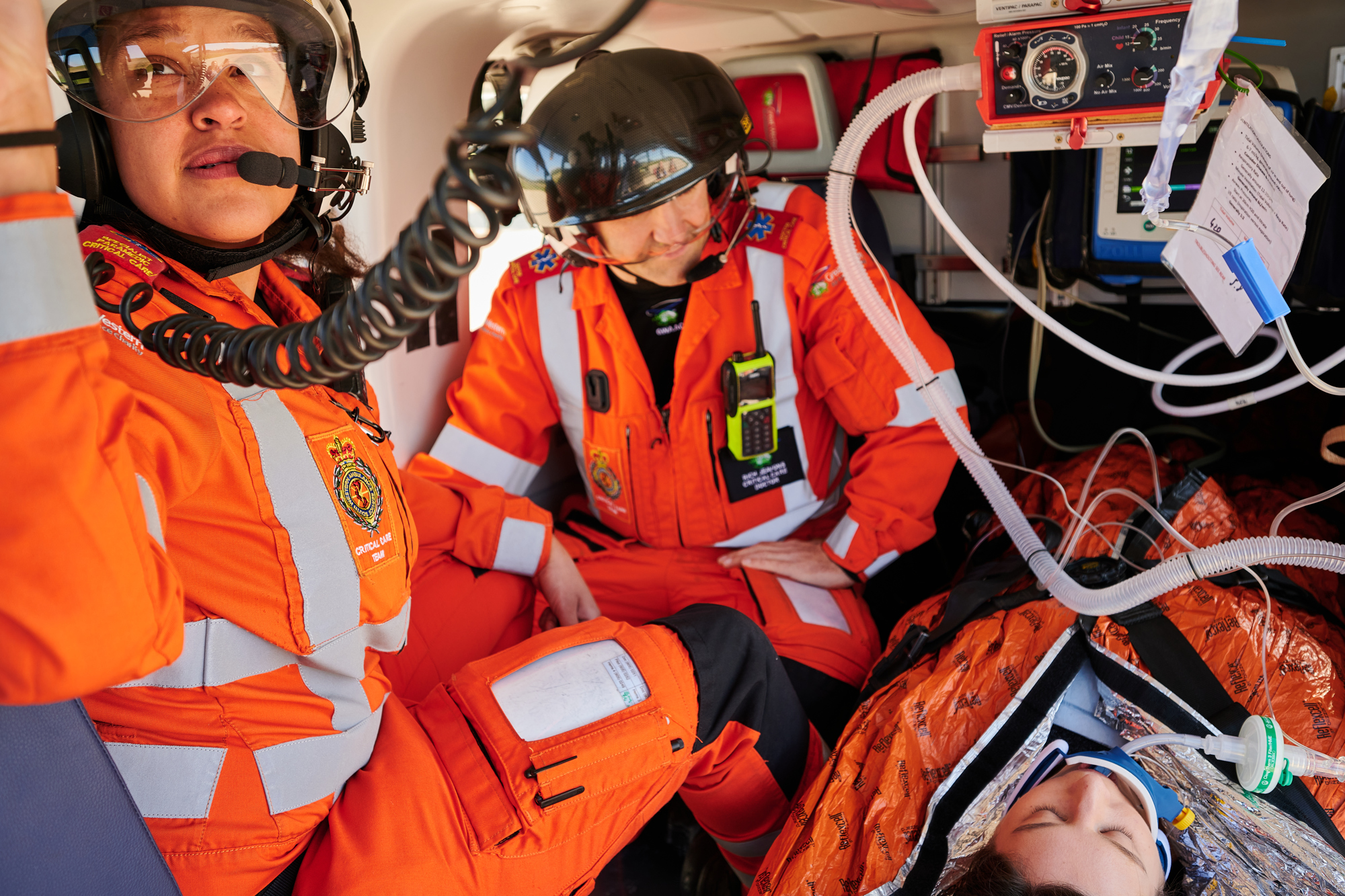
It’s more difficult for our crew to treat a critically unwell patient in the back of Great Western Air Ambulance Charity’s (GWAAC) helicopter than it is in a road ambulance. As touched upon in part one of this series, the confined space and the inability to pull-over at the side of the road means our crew only fly a select group of patients to hospital—usually those who are stable and asleep (intubated and sedated). SPCC Fleur says, “We’ll also fly patients with isolated limb injuries who may be awake and are in a rural location. If there is a medical emergency, we can unstrap our seatbelts in the air if we tell the Pilot, but this doesn’t happen very often because we fly patients who shouldn’t need intervention en route.”
Dr Chris says, “If they are awake, and we’ve decided it’s still best to fly them to hospital, they will have a headset so we can talk to them in flight and let them know what's going on. They'll be lying down on their back, strapped to the stretcher and it's quite scary to be in a helicopter; in that confined space, strapped down. We like to speak to them so they know what's going on and so they can keep us updated of how they are feeling.”
He continues, “We can fit up to five people in the helicopter: the Pilot, Technical Crew Member (TCM), Doctor, SPCC and patient. It’s rare, but if we have a child patient who is awake and we have decided to fly rather than drive, we will consider bringing the parent so they’re not alone. That might mean leaving a crew member behind.”
Crew responsibilities
The crew take on different responsibilities in flight, spreading the tasks needed to look after the patient. SPCC Fleur says, “What we do in the back of the helicopter is often determined by where we sit.”
Here’s a breakdown of our crew’s responsibilities based on where they are sat in the helicopter and their proximity to the patient:
Managing the airways
When flying without a patient, the TCM will sit next to the Pilot and assist with flying by looking out for hazards and helping with navigation. They normally face forward but when a patient is on board, that chair rotates 180 degrees to face the patient. The crew member in this seat will look after the patient’s airway because they are closest to their head.
Administering medication
The crew member in the chair next to the patient’s head (typically the Doctor’s seat) will be drawing-up the drugs needed for the patient and doing other bits.
Drawing-up drugs and other tasks
The crew member in the chair next to the patient’s body will often administer any medication needed, usually through an extension lead that is attached to the patient’s cannula.
The role of our Pilot
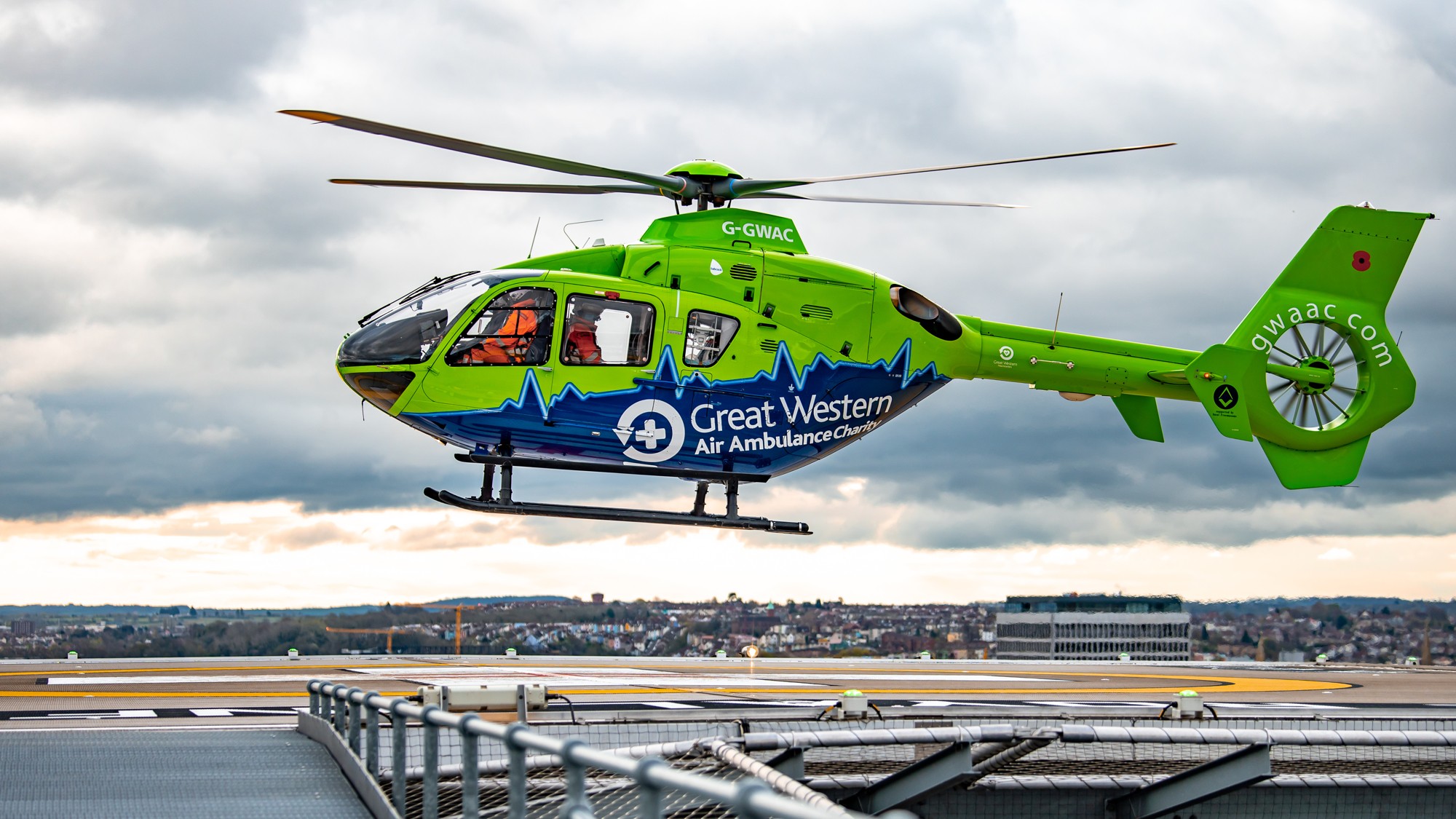
Our Pilot has responsibility for the safety of the patient and crew, the journey and the landing, including making sure that the hospital helideck or helipad is clear from other aircraft and ready to receive them. A final radio call will be made en route to re-affirm they are coming in at an estimated time of arrival.
Meanwhile, at the hospital…
Bristol Royal Infirmary’s (BRI) Helideck Supervisor Andrew Williams shares what happens when a call comes in from an air ambulance requesting permission to land:
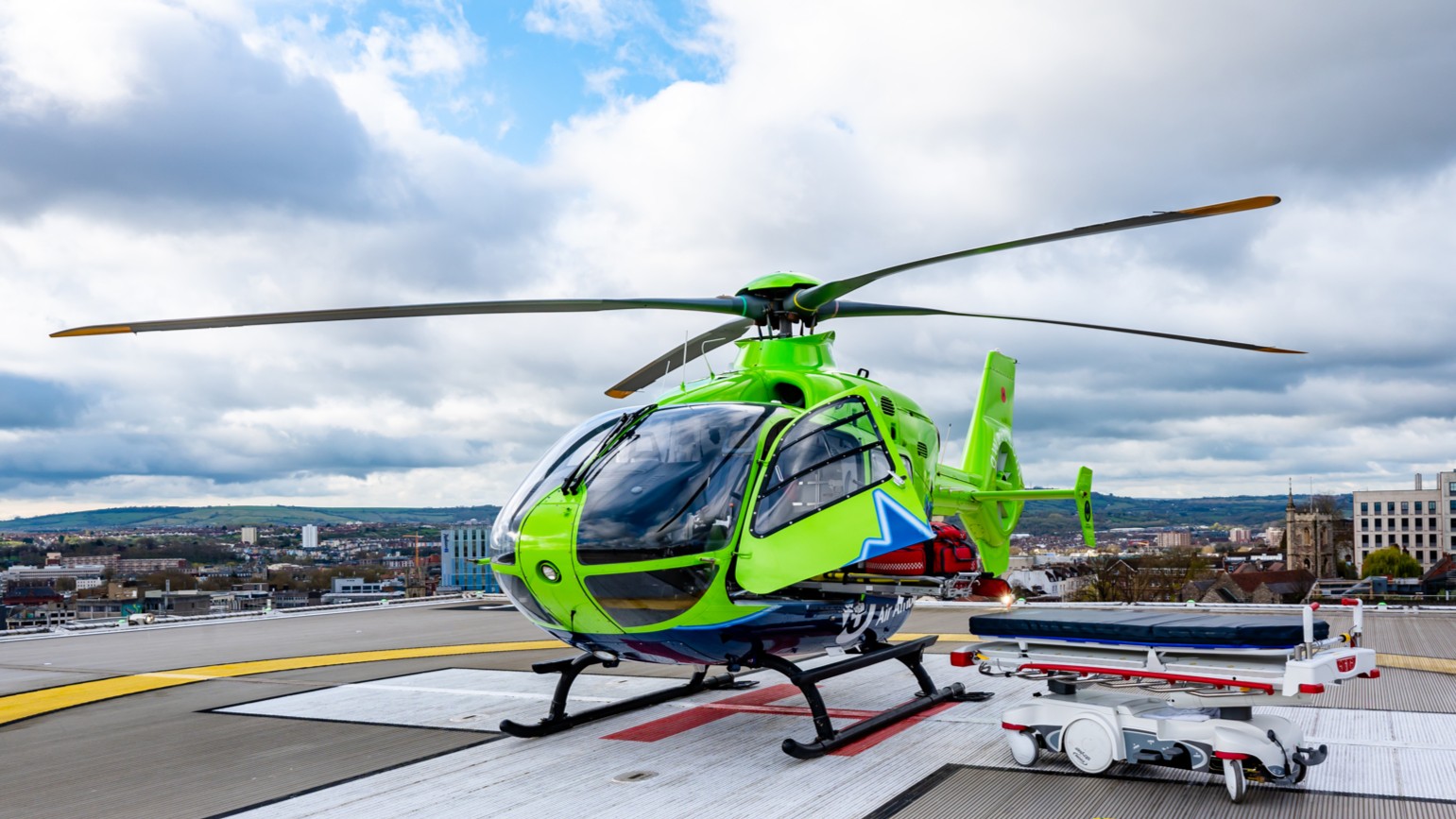
“When an air ambulance crew decide they want to bring a patient in, either to the BRI, the Heart Institute or the Bristol Children’s Hospital, we’ll get a call to the main switchboard downstairs from the crew onboard the aircraft. The switchboard will advise the air ambulance crew if the helideck is green, amber or red—red if an air ambulance is already on it, Amber if an air ambulance is on route, and green if it’s available for them to land.
The switchboard will take all the details and they’ll transfer the call to the hospital clinical team in the Emergency Department, confirming timings. Then they’ll give us a bleep on our pager and tell us which air ambulance is coming in, how many people are on board, the time of arrival, and where the patient is going (BRI/Children’s Hospital/Heart Institute). We will then put all the helideck lights on so that when the Pilot comes in, they can see that the helideck is open and manned.”
Andrew and his team will then hold the lift, ensuring it is ready for the patient’s arrival, and then wait in the helideck office. They need to watch the cameras as the air ambulance comes in to land and be by the radio in case the Pilot wants to communicate. They also need to be ready to push a button to trigger the deck-integrated fire-fighting system should there be an emergency on landing.
While Andrew and his team are in the office, two hospital porters come up to the entrance of the helideck, waiting just inside with a trolley bed for the patient.
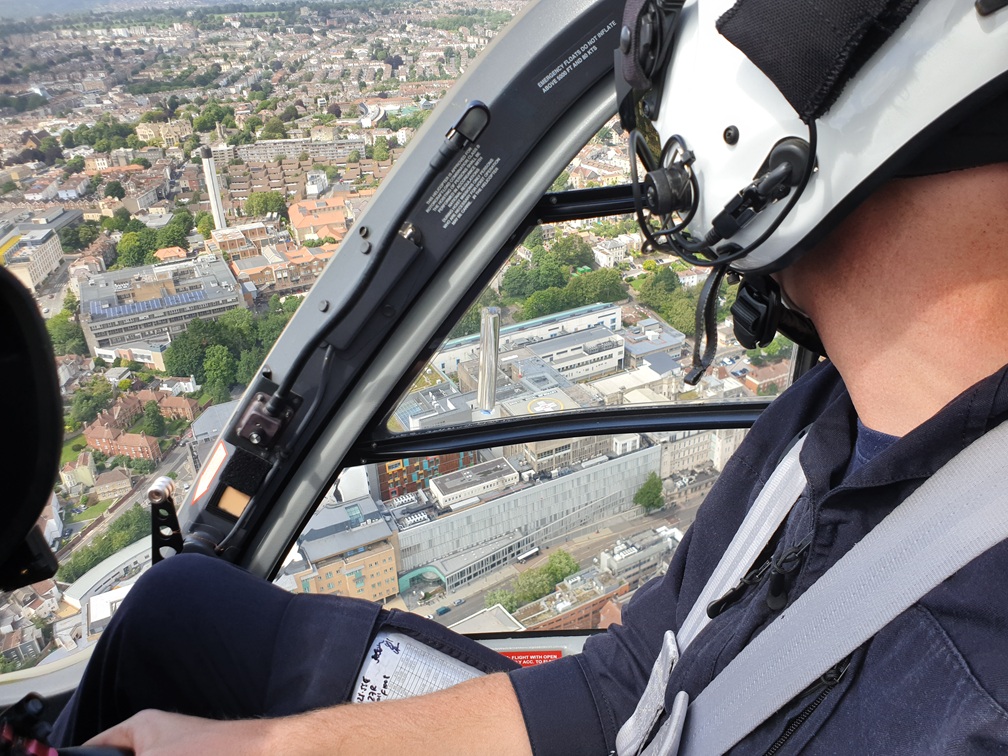
“If they are awake, and we’ve decided it’s still best to fly them to hospital, they will have a headset so we can talk to them in flight and let them know what's going on. They'll be lying down on their back, strapped to the stretcher and it's quite scary to be in a helicopter; in that confined space, strapped down. We like to speak to them so they know what's going on and so they can keep us updated of how they are feeling.”