Who’s ready before a helicopter even lands at the hospital?
April 13, 2026
The Patient Journey – from scene to hospital: Part 2
April 14, 2026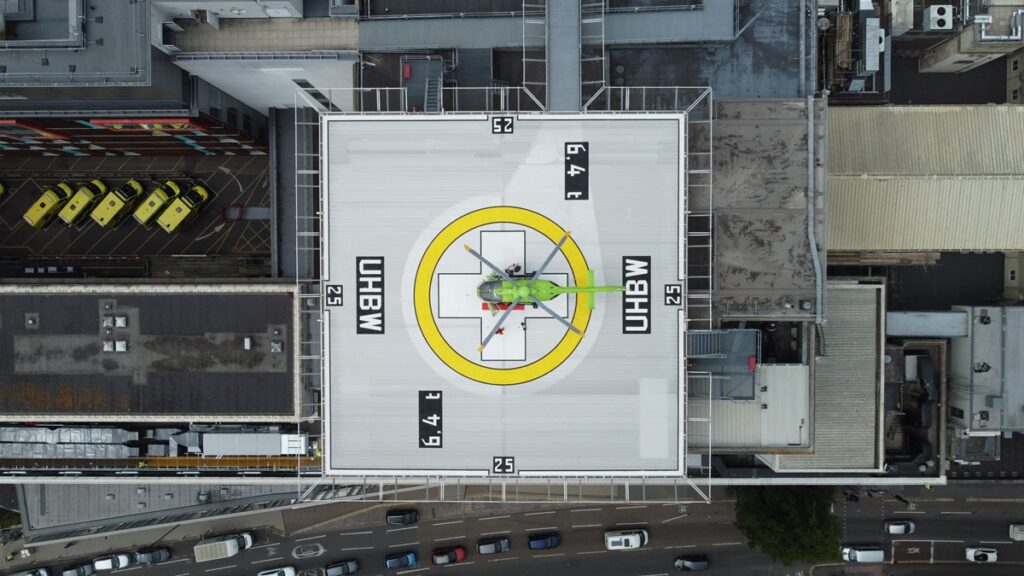
Part 3: What really happens from helideck to Emergency Department
Welcome to part three of our four-part series following the patient’s critical care journey from the scene of an incident to the Emergency Department by air.
In part one, we shared our crew’s decision-making at the scene and what they do to prepare a patient for the helicopter journey to hospital.
In part two, we revealed what happens during the flight, including how the patient is cared for in the air and how the crew, Pilot and hospital teams prepare for arrival.
In this post, we follow the final stage of the journey. From the moment Great Western Air Ambulance Charity’s (GWAAC) helicopter lands on the helideck at the Bristol Royal Infirmary (BRI), to unloading the patient and moving them down eight floors to the Emergency Department below, we’ll show how multiple teams work together to deliver the next stage of emergency care.
With thanks to Critical Care Doctor, Chris Arrowsmith, Specialist Paramedic in Critical Care (SPCC) Fleur Rath, and BRI Helideck Supervisor, Andrew Williams, for sharing their insight throughout this series.
Touchdown. What happens next?
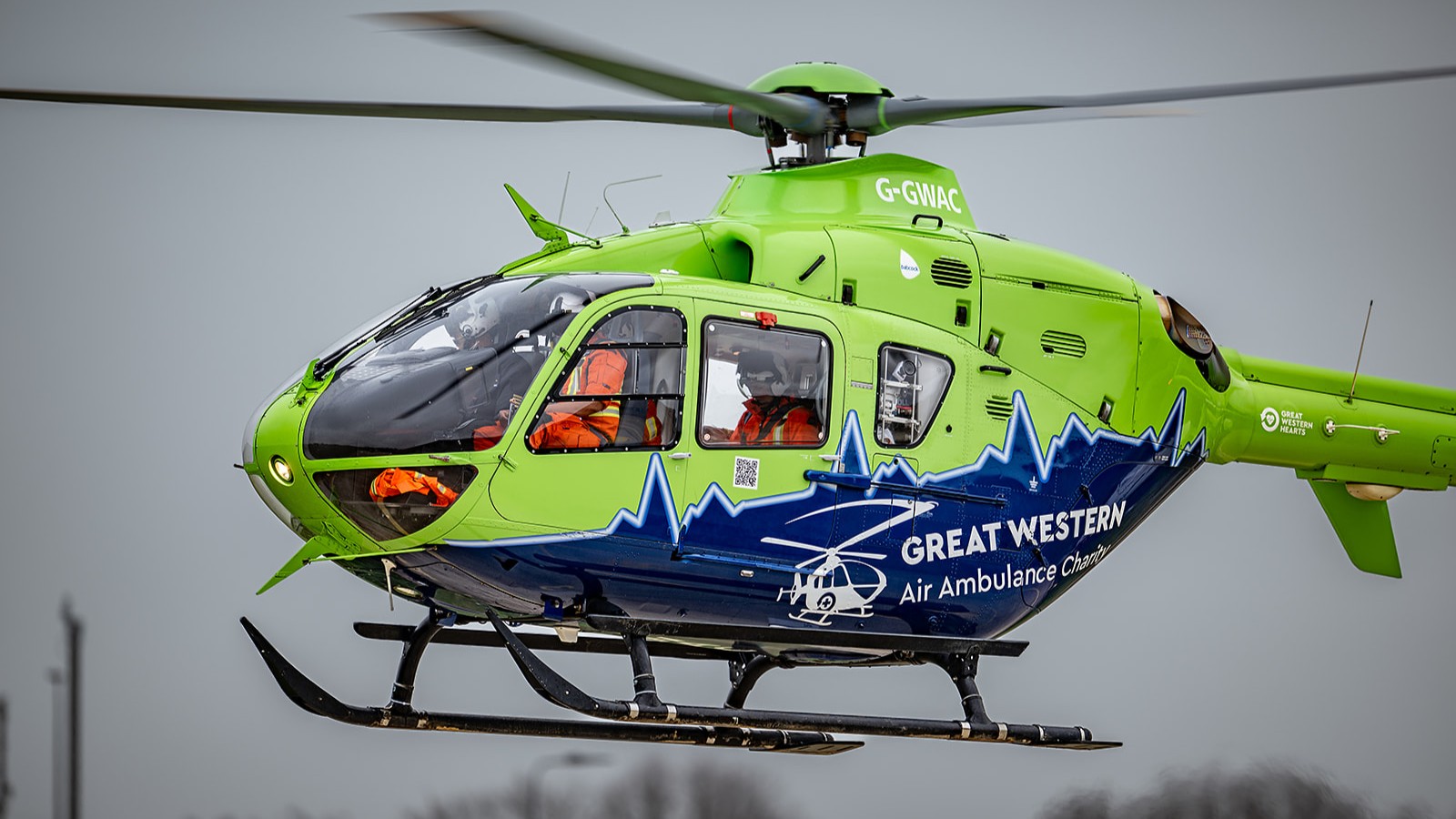
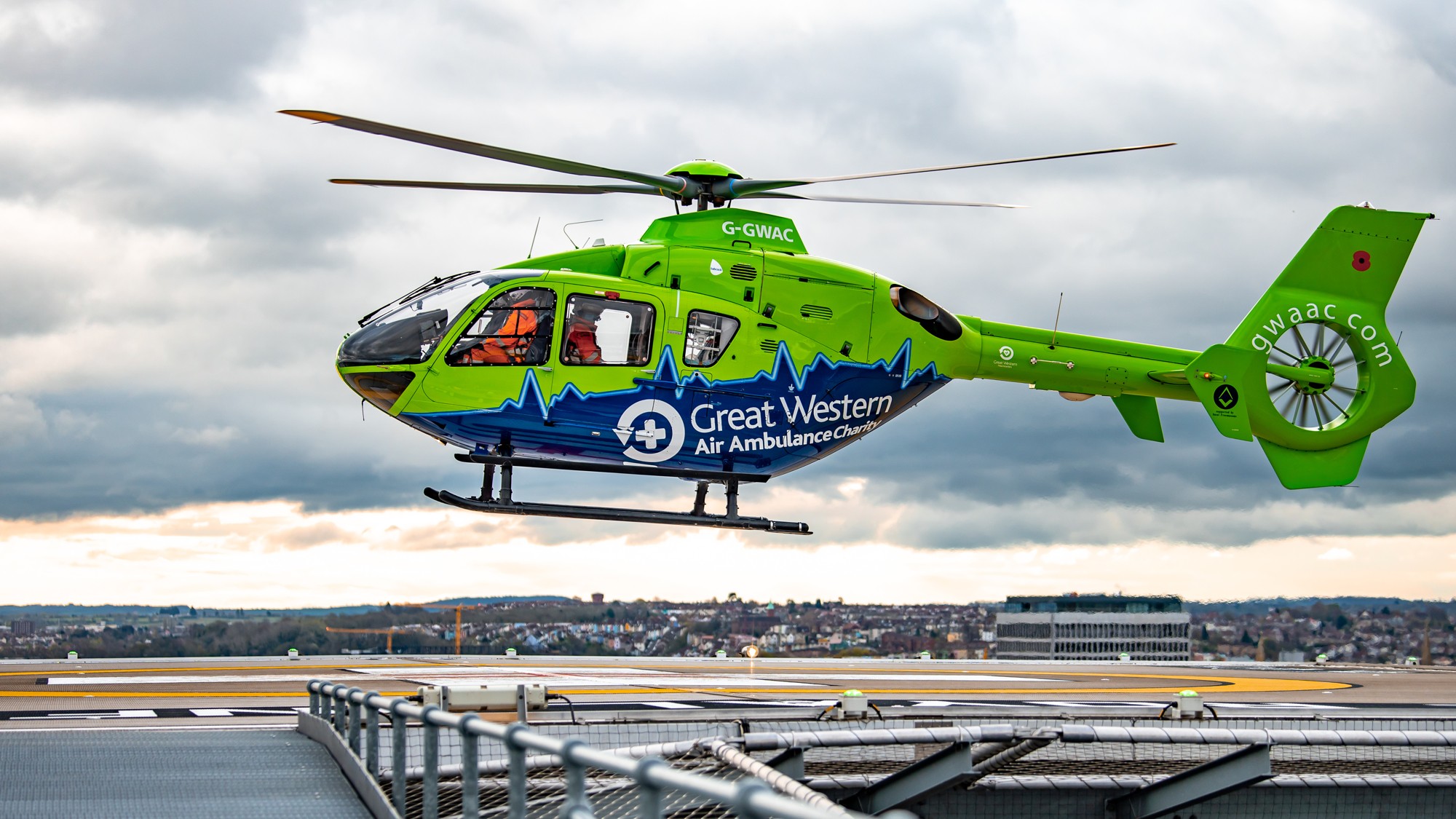
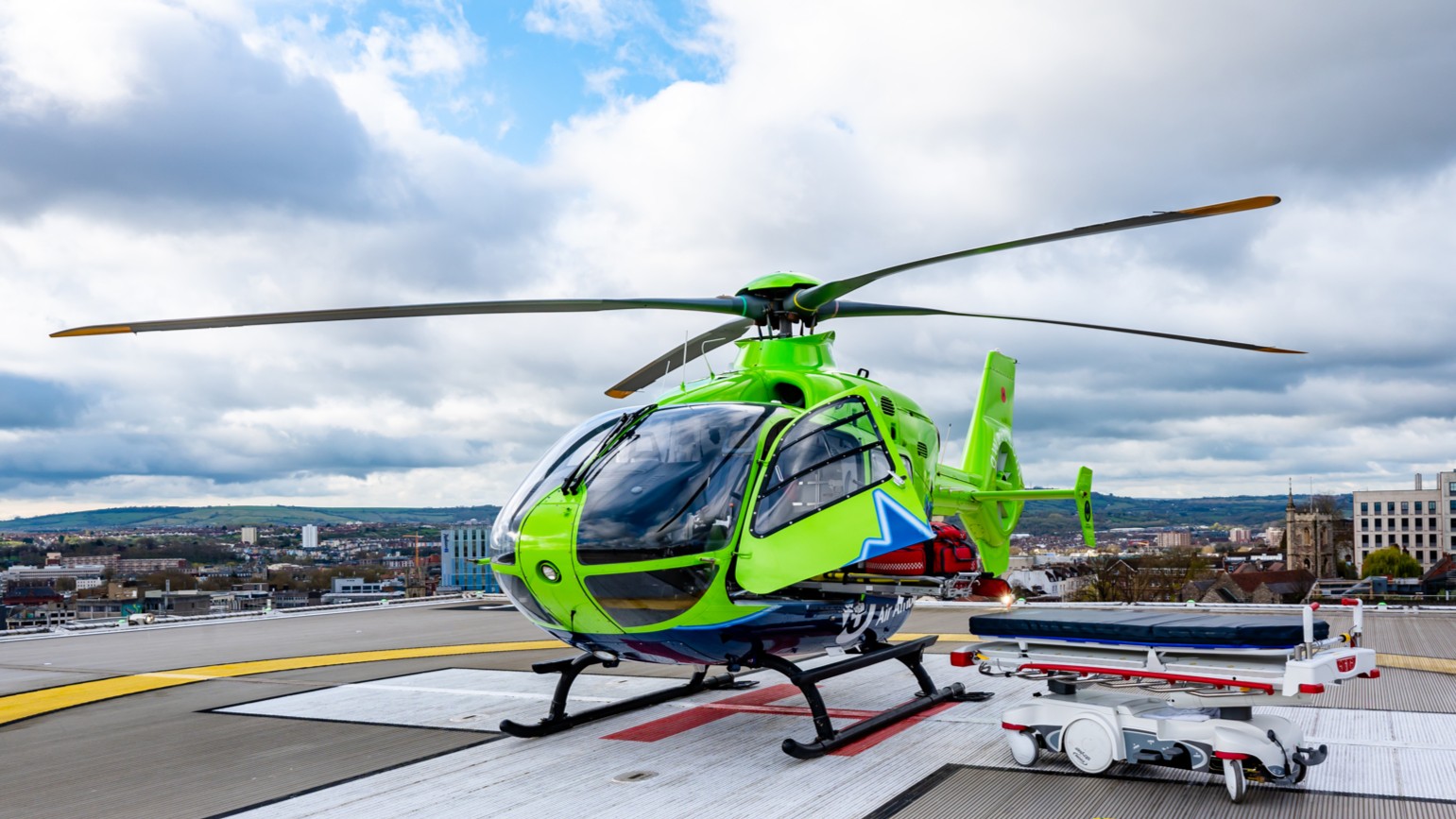
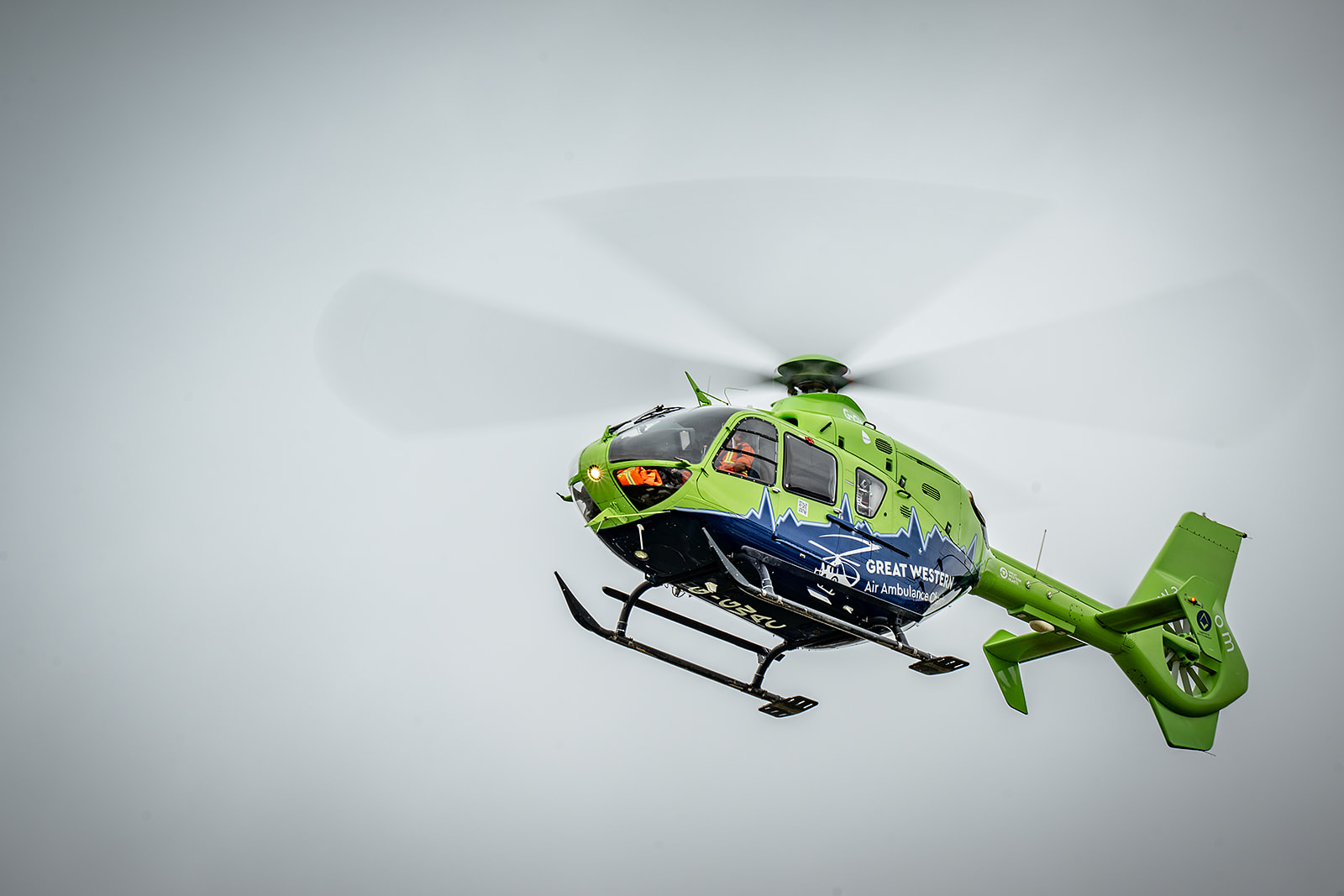
Having flown from the scene of the incident, our Pilot, crew and patient come into land in the centre of the helideck, guided by the landing lights that have been turned on by the BRI’s helideck Team.
Once the engines have been the two waiting hospital porters wheel a trolley bed up the wide winding ramps to meet the crew and their patient on top of the helideck.
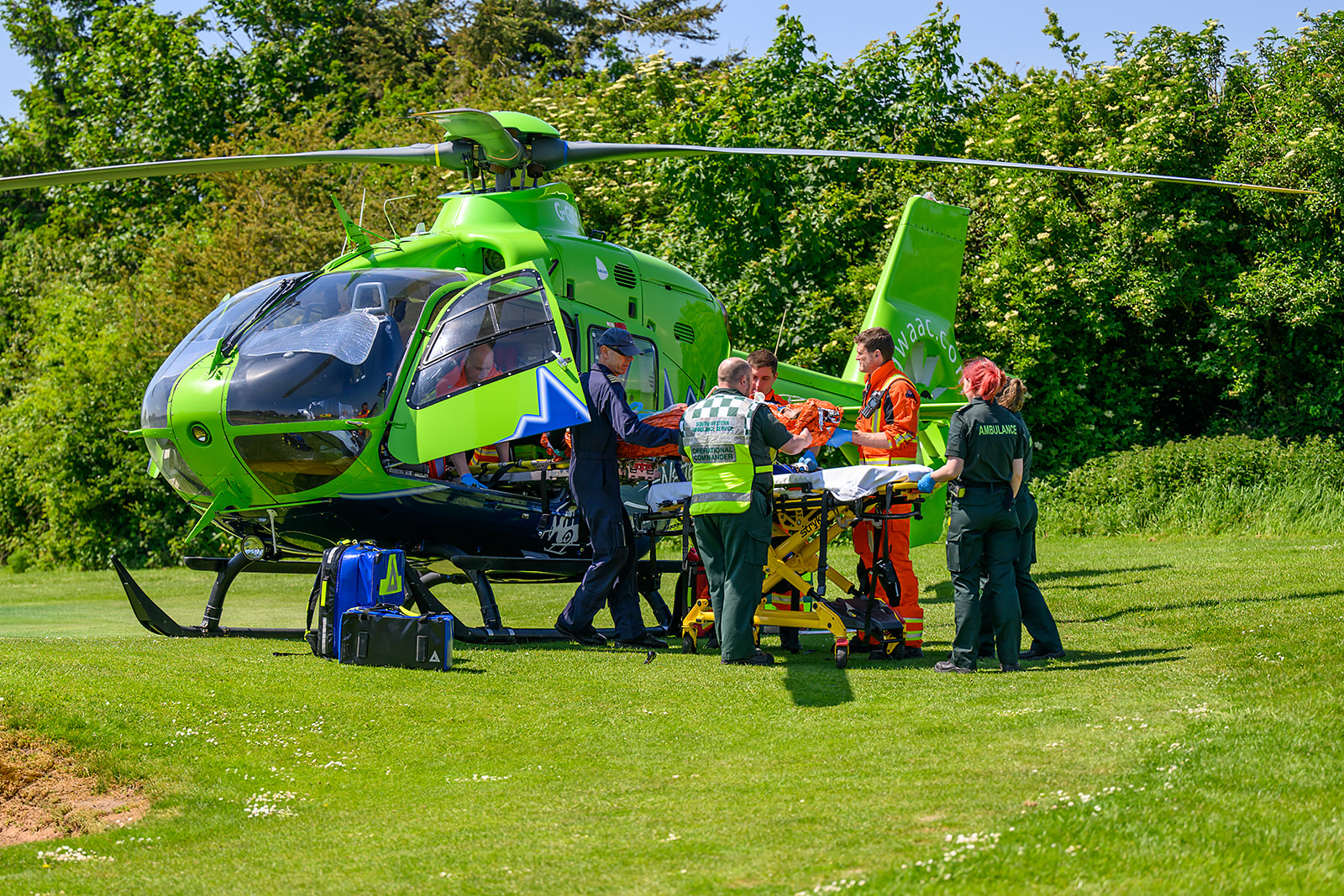
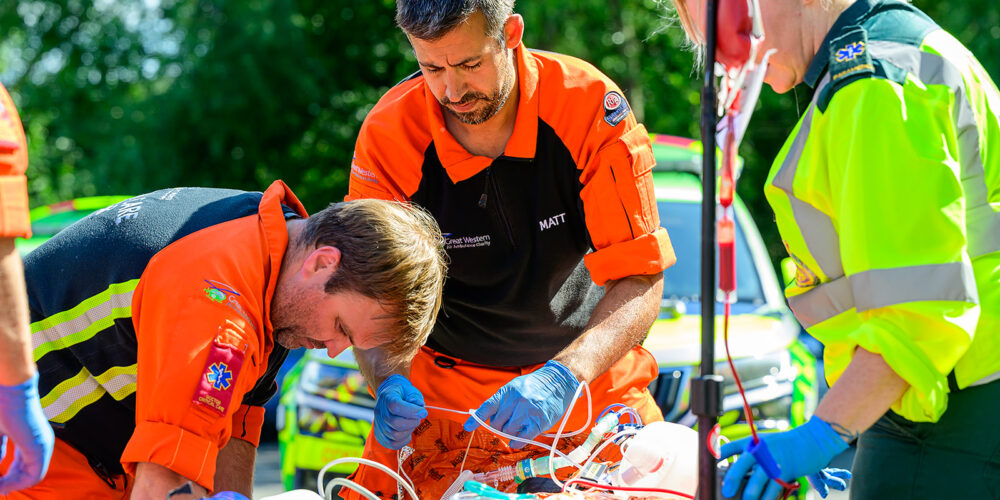
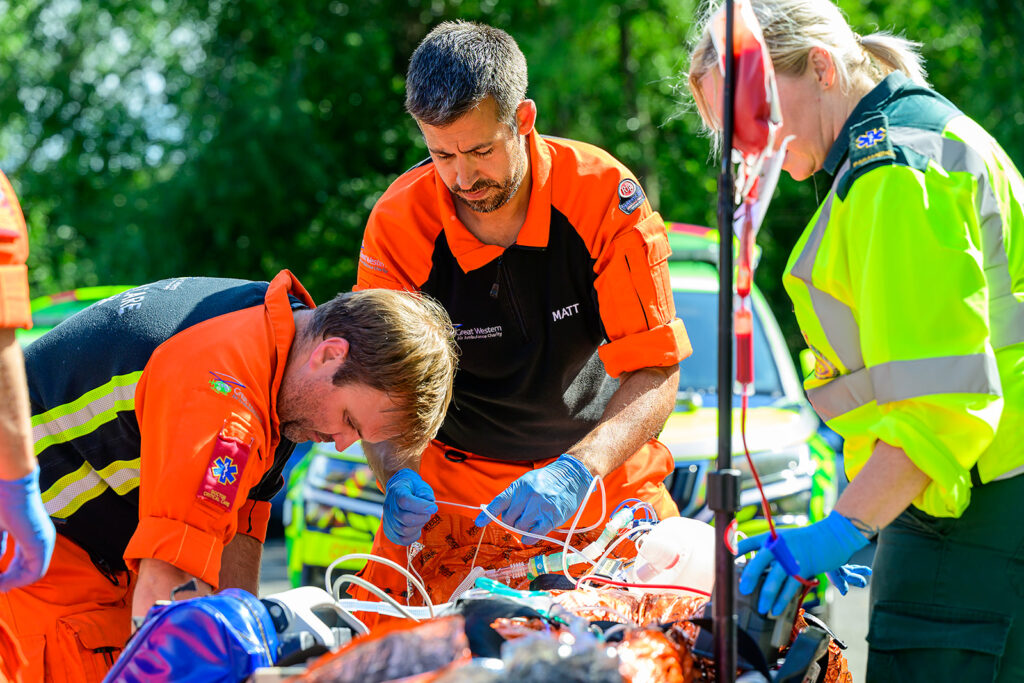
The portering team help our crew transfer the patient out of the helicopter onto the trolley with the kit and drugs that are needed to travel with them down to the Emergency Department. They will also help switch the patient from the oxygen in the helicopter to the oxygen attached to the trolley bed.
At this point, our crew make sure the patient is stable enough to continue on their journey; they check the patient from head to toe, including equipment and the patient’s observations (vital signs like pulse, temperature…) It’s a chance for the crew to change equipment settings and administer any medication before moving on.
From helideck to Emergency Department
It takes our whole Clinical Team and the hospital porters to move the patient and equipment to the Emergency Department below.
SPCC Fleur says, “We’ll always take the medications down with us, and the syringe driver, monitor and ventilator if needed. We might also have some emergency pouches from our main kit bags, depending on what they need.”
Dr Chris says, “From the point where the engines are turned off, and we can open the helicopter doors, it takes about ten minutes before we're handing our patient over in the Emergency Department. We have to go down lots of ramps just to get into the building, then past the helideck office area, then down the corridor to get into the lift.”
The journey time of ten minutes from helicopter to Emergency Department includes:
- Turning the engines off
- Transferring the patient and kit to the hospital trolley
- Stopping to run checks to make sure the patient is OK to proceed
- Moving the patient down the winding ramps from the helideck to inside the hospital, down a corridor to the waiting lift
- Getting the lift down eight floors and doing a couple of ‘pause-points.’ This is where the team while still on the move in the lift, check the critically unwell patient is stable enough to continue
- Getting out of the lift and wheeling the patient a short journey into a free resus bay in the Emergency Department
Dr Chris paints a picture of the journey in the lift: “It's normally quite cramped in the lift. There's lots of machines and equipment bleeping, people leaning over to look after the patient. Everyone is aiming to get down to level three before the patient requires further emergency treatment.”
He also shares an example of why speed matters and why the team need to take moments to check the patient is OK: “If someone has had a cardiac arrest and their heart had stopped working, then GWAAC and the ambulance teams may have done some things to get their heart working again, but the problem that caused the heart to stop working is still there and causing damage and causing cells in the heart to be in danger and to die. This is why we need to get the patients to the Emergency Department and up to the Cath Lab at the Heart Institute as quickly as we possibly can.”
Handing over the patient—from GWAAC team to hospital team
A team of hospital doctors and nurses wait for the patient and our crew in the resus bay to start the next stage of the patient’s care. SPCC Fleur says, “How many depends on the patient and the nature of their injuries or illness, but it could be up to ten people at the BRI, from the Emergency Department and different specialities.”
SPCC Chris explains the next steps: “We'll move the patient over to the hospital bed and hook them up to the hospital equipment. We'll then tell the hospital team what the problems are and what we've done to treat them so far, and then we will let the hospital team take over. We collect our kit and we’ll back away. The patient is now the responsibility of the hospital and they can decide how they're going to manage them going forward.”
The crew will do their paperwork, writing up patient notes before returning to the helicopter with their equipment. SPCC Fleur says, “We often split these roles; one of us will do the paperwork and one of us will retrieve, clean and repack the kit.” She says, “If we bring the patient in by ambulance, we debrief with the ambulance crew who travelled with us, but in order to vacate the helideck as quickly as possible so other air ambulances can land and also to be ready to respond to our next patient, our crew will often debrief in further detail with each other later.”
Meanwhile, back at the helicopter
While our crew and porters have been tending to the patient, our Pilot has carried out other tasks to get the helicopter ready for the next call-out, including:
- Turning off the oxygen and draining it from the circuit in the helicopter
- Getting the kit bags out of the front footwell and putting everything back in its place
A member of the helideck team will be in the office, ready to talk to our Pilot on the radio if needed, and ready to activate the fire-fighting system in the event of an emergency. Learn more about the role of the BRI helideck in part two of this series and in a day in the life of a Helideck Supervisor.
Our helicopter cannot leave the helideck unless the Helideck team are on standby.
Ready for the next mission
Once the patient handover is complete, paperwork is done, and the kit is packed away, our crew are ready for the next mission. SPCC Fleur says, “There is no fixed time, but realistically it can take around half an hour for us to handover the patient and be ready for the next call-out. It can be an hour or more if we debrief with the ambulance crew, but if we know there is another job to go to, we can just hand over the patient, grab the kit and go, and do the paperwork later on.”
The crew will call the Helicopter Emergency Medical Services (HEMS) Desk in Exeter (See blog post part one to learn more about the role of the HEMS Desk) to confirm they are ready to respond to the next patient. They will then head back to GWAAC’s airbase to restock with kit, unless they are immediately tasked to another incident.
It takes a huge team effort to give someone their best chance on their worst day
If you have read all three blog posts in this series, you will now have a good understanding about what’s involved in the patient’s critical care journey from scene to Emergency Department by air.
Next time you’re in central bustling Bristol and you see our lime green and blue helicopter flying to the BRI, you might take a few minutes to think of the patient and the efforts the teams are going to, to give them their best chance of surviving their worst day.
For every patient conveyed to hospital by GWAAC’s helicopter and Critical Care Team, they need:
- Someone to call 999 (1)
- A 999 call handler (1)
- A hems desk dispatcher (1)
- An air ambulance Critical Care Team (2 SPCCs and 1 Critical Care Doctor) and their specialist kit
- A Pilot (1)
- A helicopter and fuel (1)
- A road ambulance (1 or 2 depending on type of incident) and Paramedics (up to 4)
- A hospital Switchboard Operator (1)
- A Helideck Supervisor (1 or 2)
- Hospital porters (2)
- Emergency Department Doctors and nurses (up to 10 at the BRI. Could be 15 for life-threatening adult trauma injuries at Southmead Hospital)
- Dedicated and passionate supporters donating their time and money to keep GWAAC operational

“From the point where the engines are turned off, and we can open the helicopter doors, it takes about ten minutes before we're handing our patient over in the Emergency Department. We have to go down lots of ramps just to get into the building, then past the helideck office area, then down the corridor to get into the lift.”

“There is no fixed time, but realistically it can take around half an hour for us to handover the patient and be ready for the next call-out. It can be an hour or more if we debrief with the ambulance crew, but if we know there is another job to go to, we can just hand over the patient, grab the kit and go, and do the paperwork later on.”