The first six months of 2026
July 1, 2026
Two days, 143.6 miles – the journey of a lifetime
July 14, 2026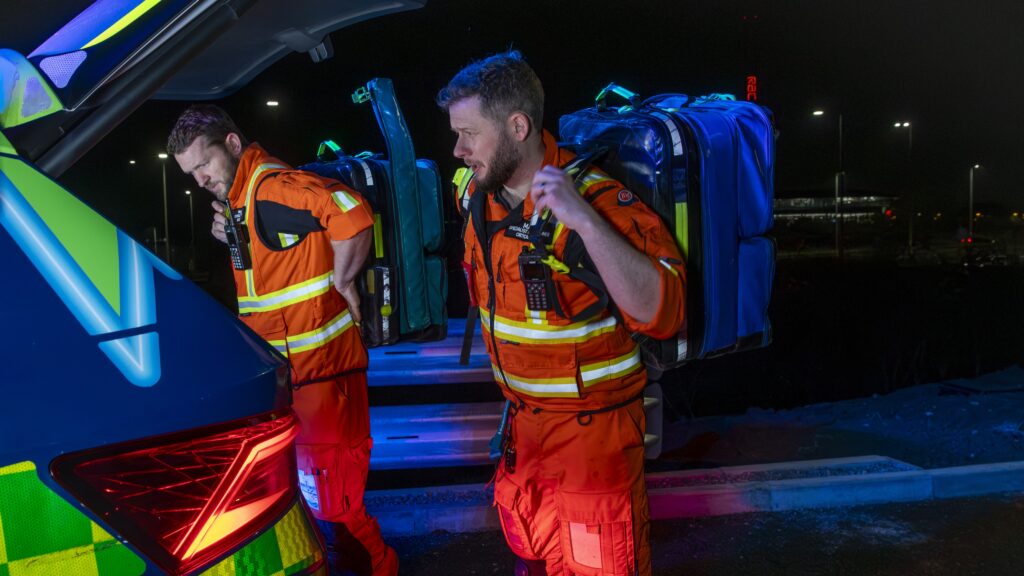
Have you ever wondered, when you’ve seen our helicopter overhead or our critical care cars on the roads, who is inside rushing to treat someone in urgent need?
At Great Western Air Ambulance Charity (GWAAC), we are proud to have a Critical Care Team made up of outstanding Doctors and Paramedics who use their combined expertise to save lives. Each member of the team is highly trained and experienced, having spent many years in medicine before joining GWAAC.
Each of the team has their own unique part to play in ensuring our patients receive the best care possible. Read on to find out more about their roles and how they help our patients.
Advanced and Specialist Paramedics
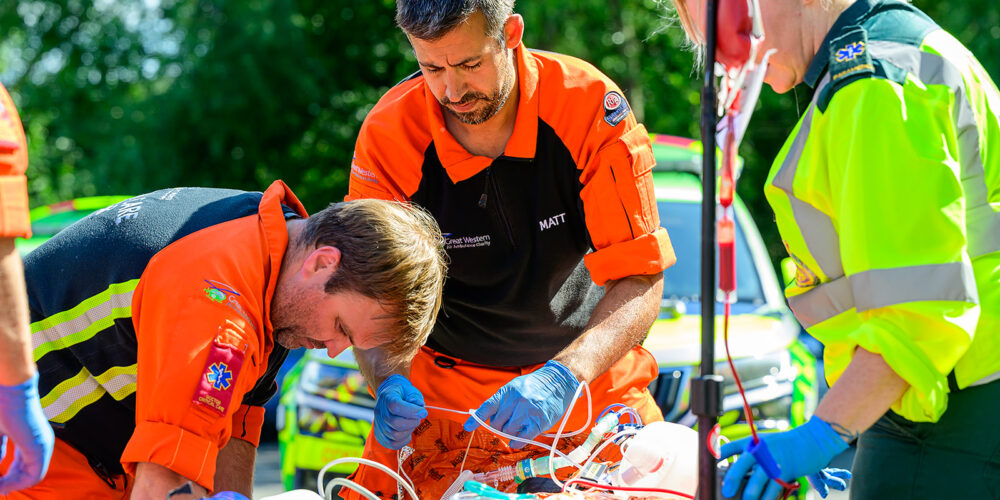
Our Specialist Paramedics in Critical Care (SPCCs) bring hospital-level care straight to patients, making critical decisions and providing treatments beyond those of a standard ambulance crew. All of our SPCCs have spent many years working as paramedics before joining GWAAC. They perform lifesaving interventions such as airway management and blood transfusions and give strong pain relief or sedation for urgent procedures.
Our Advanced Practitioners in Critical Care (APCCs) can perform additional procedures and prescribe stronger medications without a Critical Care Doctor present.
Both APCCs and SPCCs have a vital role to play before they even arrive on scene. They are blue light trained and drive our critical care cars to the scene of an emergency. When travelling by air, they also have an incredibly important role. Each SPCC is trained as a Helicopter Emergency Medical Services (HEMS) Technical Crew Member. This means they sit in the front of the helicopter, help plot the route to the patient, programme the GPS system on board the aircraft to assist the pilot in navigating, and identify suitable and safe landing sites as close to the scene as possible. The team can only land at unsurveyed landing sites, such as parks, fields and other open spaces, when a HEMS Technical Crew Member is on board the aircraft.

Critical Care Doctors
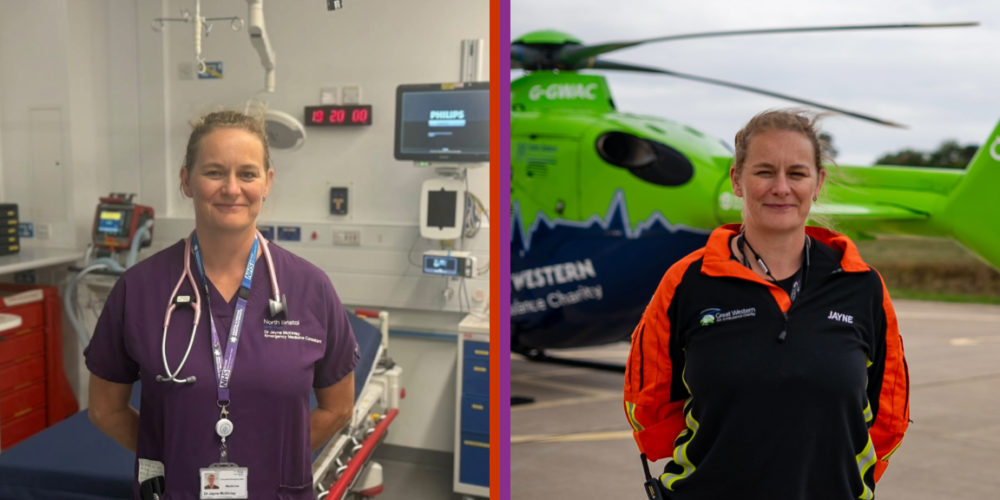
Our Critical Care Doctors are hospital consultants with extra training in pre-hospital emergency medicine (PHEM). They enhance the hospital-level care our Specialist Paramedics provide at the scene.
They can carry out complex, high-risk, lifesaving procedures wherever the incident has taken place, including pre-hospital emergency anaesthesia to make patients unconscious and pain-free; thoracotomy to relieve trapped air or blood after severe trauma; and emergency C-section for a mother in cardiac arrest to try to save both her and the baby.
They also deliver advanced heart care and specialised medications not available to paramedics, to help patients in the crucial moments before reaching hospital.


Pilots
Our Pilots are specialist HEMS Pilots who help our Critical Care Team reach patients quickly and safely when flying is the best option. They fly in changing weather and across varied landscapes, sometimes with limited places to land. They carefully choose a safe landing site close to the incident while keeping people on the ground safe.
Our Pilots don’t provide medical care. They work closely with the crew to ensure they and their equipment arrive where they’re needed, to help patients get expert care as quickly as possible.