Introducing our new Aide Memoire for Enhanced or Critical Care Requests
February 18, 2026
GWAAC Clinicians on the Pre-hospital Care Podcast
May 9, 2026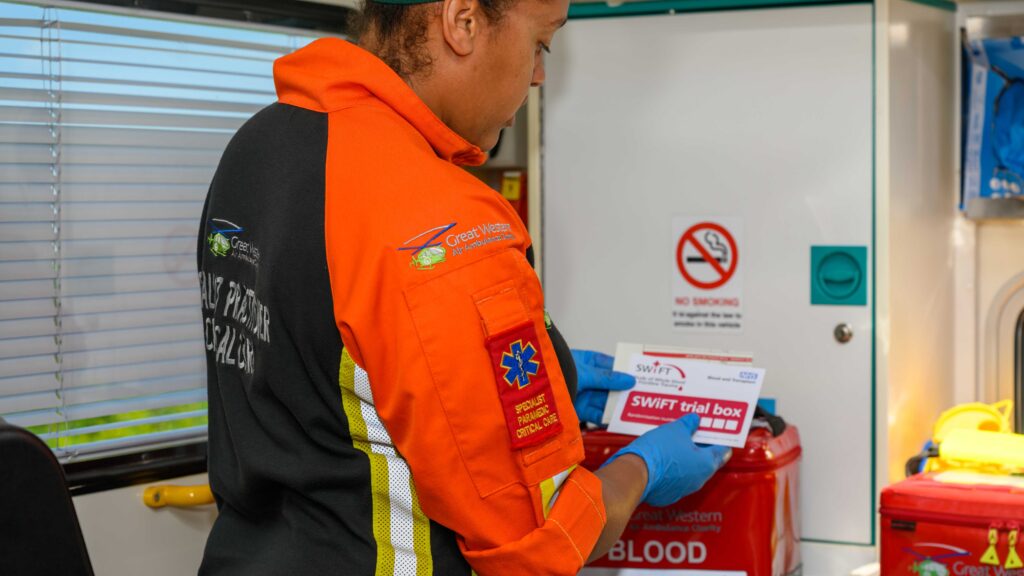
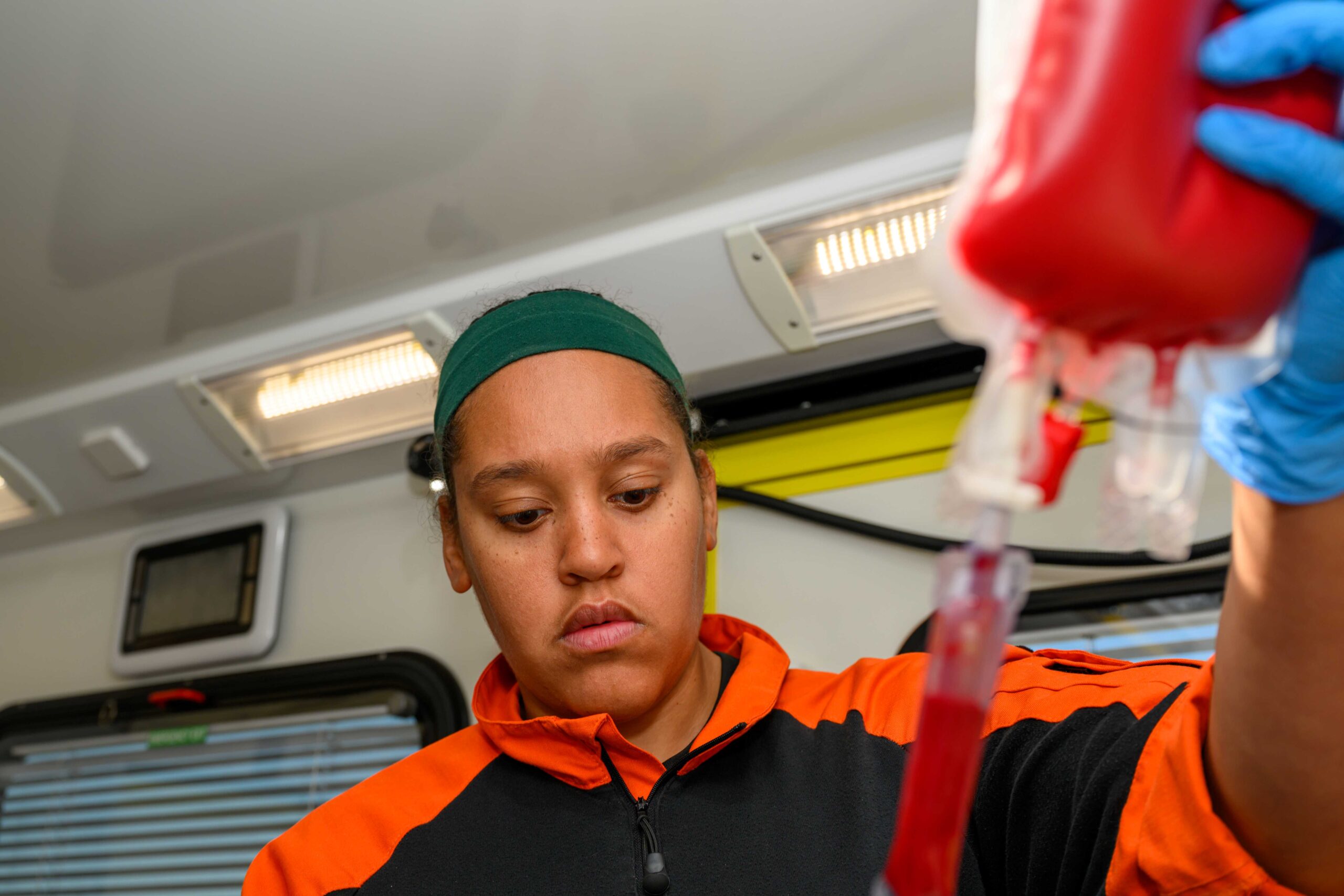
NHS Blood and Transplant, in collaboration with Great Western Air Ambulance Charity (GWAAC) and nine other air ambulance charities across England, Air Ambulances UK and Ministry of Defence, has published the results of the landmark Study of Whole Blood in Frontline Trauma (SWiFT) trial in the New England Journal of Medicine (NEJM), providing important new evidence on the use of whole blood transfusions in pre-hospital trauma care.
The study, funded by NHS Blood and Transplant, the Ministry of Defence and 10 air ambulance charities, including GWAAC, explored whether giving whole blood at the scene of a traumatic incident could improve survival and reduce the need for further major transfusions once patients arrive at hospital.
About the SWiFT Trial
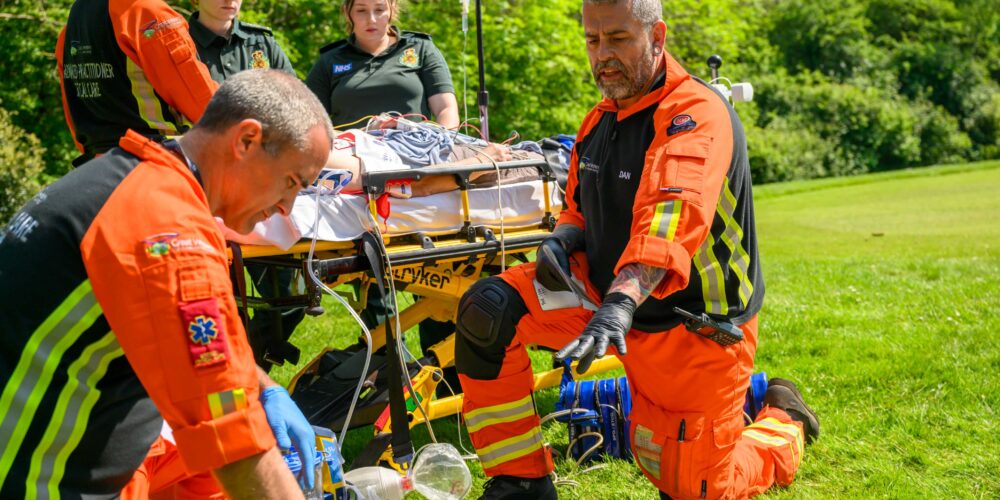
At GWAAC, we regularly attend patients with life-threatening bleeding following serious injury. Early blood transfusion is known to improve survival, but until now, there has been limited large-scale evidence comparing different transfusion strategies in the UK pre-hospital setting.
Traditionally, patients receive red blood cells and plasma as separate components. Whole blood (WB) – as it comes from a donor, containing red blood cells, plasma and platelets in a single bag – has attracted increasing interest. It offers potential practical advantages in the pre-hospital environment, including:
- Simpler storage and transport
- Reduced kit weight for clinical teams
- Faster administration at scene
In 2019, a survey of UK air ambulance charities found that 82% said whole blood would be their preferred blood component, and all respondents supported the need for a robust clinical trial before widespread NHS adoption.
The SWiFT trial began in December 2022 and recruited 942 patients over two years.
The Results
After exclusions, 616 trauma patients were analysed (314 receiving whole blood and 302 receiving standard care).
The study found:
- The primary outcome (death or massive transfusion within 24 hours) occurred in 48.7% of the whole blood group and 47.7% of the standard care group
- There was no statistically significant difference between the two approaches
- Mortality at all time points and rates of massive transfusion were similar between groups
- Safety outcomes were comparable
In participants with life-threatening haemorrhage, pre-hospital transfusion of two units of whole blood was not superior to standard care in reducing death or the need for massive transfusion within 24 hours.
Advancing Trauma Care Through Evidence
While the trial did not demonstrate improved outcomes with whole blood, publication in NEJM — one of the world’s most respected peer-reviewed medical journals — reflects the significance and quality of the research.
Professor Laura Green, co-chief investigator for SWiFT, Associate Medical Director for Research and Development at NHS Blood and Transplant, Professor of Haemostasis and Transfusion Medicine at Queen Mary University of London, and Consultant in Haemostasis and Transfusion Medicine at Barts Health NHS Trust, said:
“The contribution of everyone involved in the trial – from air ambulance pilots, blood service, our blood donors and supporters to the trial team and military medics – will help guide the future care of people experiencing traumatic, life-threatening bleeds.
“The trial did not show a benefit from whole blood but in providing that answer it will help us improve trauma care. We are thankful to the participating air ambulance organisations and Defence Medical Services for collaborating with us to drive innovation and research for seriously ill patients.”
Lindsay Boswell, Interim CEO of Air Ambulances UK said:
“The publication of the SWiFT trial in the New England Journal of Medicine marks an important moment for pre-hospital emergency medicine in the UK.
Although whole blood was not shown to improve outcomes compared to current practice, having clear, high-quality evidence allows the sector to make informed clinical decisions.
Air ambulance charities are committed to continual improvement in trauma care, and this trial reflects that shared commitment to evidence-led innovation.”
The findings provide critical evidence to inform future clinical guidance, procurement decisions and research priorities across the NHS and the pre-hospital emergency medicine sector.
Doctor Jules Blackham, Critical Care Doctor and Clinical Research Working Group Lead at GWAAC said:
“We are proud that the results of the SWiFT trial have been published in the New England Journal of Medicine — one of the world’s most prestigious medical journals.
GWAAC was a participating site in this landmark multicentre study, which investigated whether administering pre-hospital whole blood transfusion to patients with life-threatening traumatic haemorrhage leads to better outcomes than standard component therapy. Our Critical Care Teams recruited over 30 patients to the trial, contributing to this important body of evidence that has the potential to shape how trauma patients are treated at the scene of their most critical moment.
We are enormously grateful to the patients and families who consented to take part, and to our clinicians whose commitment to research — alongside their lifesaving work — makes contributions like this possible. We are delighted to have played a part in research that could improve survival for seriously injured patients across the UK and beyond.”
Air Ambulance Charity Participation
As well as GWAAC, the following nine air ambulance charities also contributed to the SWiFT trial:
- Air Ambulance Kent Surrey Sussex
- Dorset and Somerset Air Ambulance
- Essex and Herts Air Ambulance
- Great North Air Ambulance Service
- Hampshire and Isle of Wight Air Ambulance
- London’s Air Ambulance Charity
- Magpas Air Ambulance
- North West Air Ambulance
- Thames Valley Air Ambulance
Their collaboration demonstrates the sector’s commitment to strengthening the evidence base behind pre-hospital emergency care.

We are proud that the results of the SWiFT trial have been published in the New England Journal of Medicine — one of the world’s most prestigious medical journals.
GWAAC was a participating site in this landmark multicentre study, which investigated whether administering pre-hospital whole blood transfusion to patients with life-threatening traumatic haemorrhage leads to better outcomes than standard component therapy. Our Critical Care Teams recruited over 30 patients to the trial, contributing to this important body of evidence that has the potential to shape how trauma patients are treated at the scene of their most critical moment.
We are enormously grateful to the patients and families who consented to take part, and to our clinicians whose commitment to research — alongside their lifesaving work — makes contributions like this possible. We are delighted to have played a part in research that could improve survival for seriously injured patients across the UK and beyond.