Welcome to our new trustees
June 5, 2026
The first six months of 2026
July 1, 2026
Bringing critical care forward: How GWAAC’s Paramedics are adding value at the point of a 999 call
When a 999 call is made, it can mean that someone is having the worst day of their life. For patients with life-threatening injuries or serious medical emergencies, the speed and precision of the response can make a significant difference to their outcome.
We’re pleased to share that some of Great Western Air Ambulance Charity’s (GWAAC) Specialist Paramedics have been part of a new way of working that is helping to bring critical care forward to the very moment that some of the most urgent 999 calls are made.
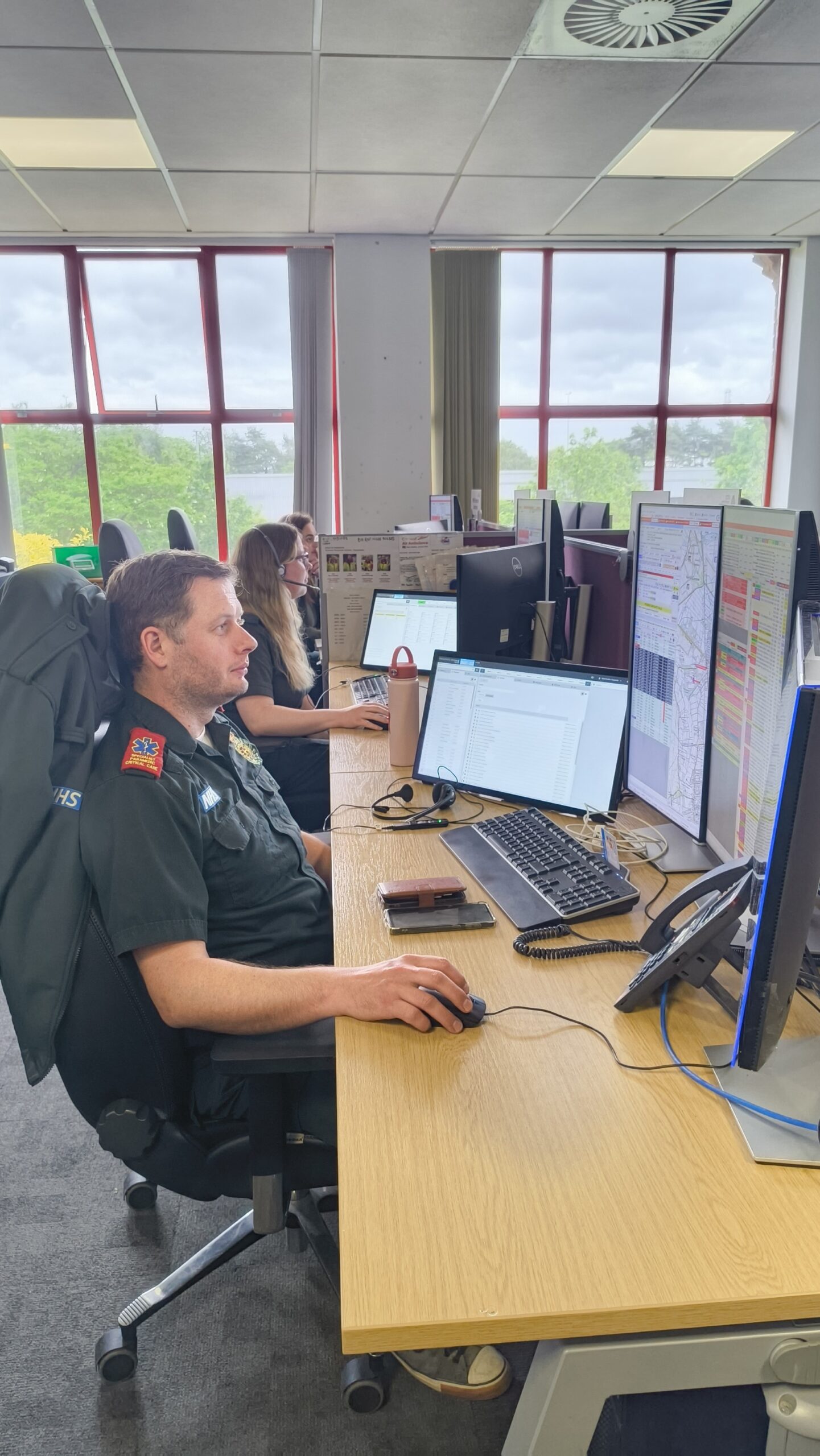
Following a successful trial, Specialist Paramedics in Critical Care (SPCCs) are now embedded within South Western Ambulance Service NHS Foundation Trust’s (SWASFT) Control Room, where 999 calls come in and resources are dispatched.
The SPCCs are working on a new Critical Care Desk providing immediate clinical advice to ambulance crews and 999 callers. Their clinical knowledge is resulting in earlier specialist intervention for patients needing pre-hospital emergency care.
What’s changed?
Six SPCCs (three from GWAAC and three from Dorset and Somerset Air Ambulance) work on a rota on the Critical Care Desk. They help by:
- Listening to live 999 calls for life-threatening incidents
- Providing immediate clinical advice to ambulance crews and 999 callers if required
- Supporting decision-making on the most appropriate resource(s) to send
A patient story: Care before the ambulance arrived
SPCC Callum shares an example of how the collaboration has positively impacted patients requiring urgent pre-hospital critical care. He says:
“A 999 call came in for a child on holiday in a remote area. The child had a pre-existing medical condition that caused his heart rate to suddenly rise to a dangerous level. An SPCC listening to the call was able to speak directly to the parents and guide them through techniques to slow the heart rate while they waited for the ambulance. The intervention stabilised the child and reduced immediate risk.”
This is what bringing the point of care forward looks like in practice.
Why change was needed
Advanced Practitioner in Critical Care (APCC) Dan was part of the group that helped establish the trial of the new Critical Care Desk. He said, “I believed that by adding an SPCC into the Control Room environment, their knowledge and clinical decision-making would be available at the earliest possible stage.”
“For patients in our region, and across SWASFT’s wider area, that could mean more accurate triage of complex cases and earlier preparation of the patient for critical interventions.”
When someone is in a state so critical that they require the specialist skills of our team at the scene of the accident or medical incident, every second counts. The ultimate goal of the Critical Care Desk is to shave time off a patient receiving the most appropriate care and resource for their individual needs, giving them the best chance of a positive outcome.
How it works day to day
The trial began in February 2025 with four SPCCs (two from GWAAC) working shifts in the SWASFT Control Room near the Helicopter Emergency Medical Services (HEMS) Dispatchers. It has since expanded to six SPCCs across two air ambulance services, with the aim of daily coverage.
SPCCs now work regular shifts within the Control Room, either in Exeter or remotely from Bristol.
Their role includes:
Listening to the most urgent 999 calls
They monitor life-threatening incidents in real time and can ask additional clinically focused questions — either through the call handler or directly with the caller.
Sending video links to callers’ phones helps SPCCs assess the scene visually and triage patients before resources arrive, particularly useful for multi-casualty road traffic collisions.
Providing clinical advice
Road ambulance crews on scene can contact the Critical Care Desk for immediate advice on medication, procedures, hospital destination decisions, resuscitation or end-of-life care.
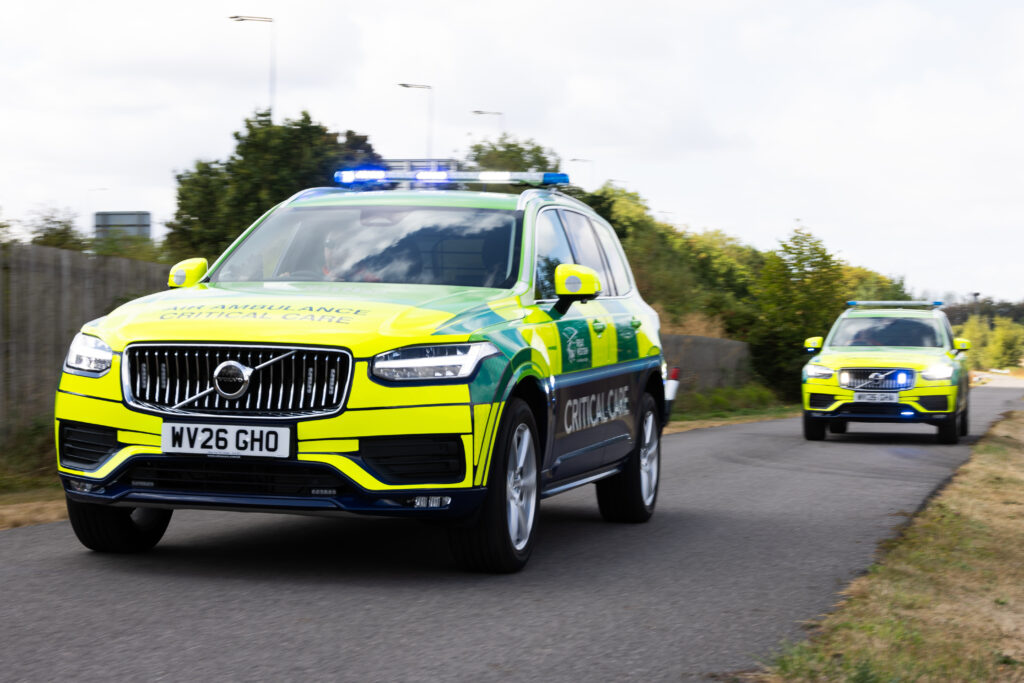
If our Critical Care Team is en route, the SPCC in the Control Room can guide the road ambulance crews to prepare the patient for advanced interventions — such as Pre-Hospital Emergency Anaesthesia — reducing time to treatment once our crew arrives.
Supporting resource management in the Control Room
If the SPCC on the Critical Care Desk has spoken to someone at the scene, asked the right questions with their clinical knowledge, and obtained a better picture of what that patient needs, this can help with decision making around the most appropriate resources to send.
Early impact
SPCC Callum says, “Feedback from the Control Room and road ambulance crews has been overwhelmingly positive with many valuing the immediate access to advice from the Critical Care Desk. We’ve seen some really good benefits for patients by bringing that point of critical care forward.”
By the end of 2025, the initiative had already helped free up over a thousand road ambulance deployments. That means:
- Greater availability of crews for other emergencies
- Reduced pressure on resources across the region
- Significant cost savings for SWASFT
There have also been operational improvements. For example, SPCC feedback led to changes in 999 call-handling scripts to prioritise injury details earlier in road traffic collision calls, ensuring clinical urgency drives dispatch decisions.4
On scene: The difference it makes
Our crew have noticed the positive impact of the Critical Care Desk during their operational shifts. SPCC Callum says: “In the past, we’d receive calls from road ambulance crews asking whether our team could add value, and we’d need to gather more information before deciding which took time. Now, we know the SPCC in the Control Room has already made that assessment. When the call comes through, we go.”
That clarity improves response time which is critical for major trauma, cardiac arrest and severe head injury cases.
In one incident, careful listening by the SPCC in the Control Room during a 999 call revealed signs of a serious head injury following a road traffic collision. The response was upgraded immediately to our Critical Care Team, who were on scene within 20 minutes. The team’s fast response and the specialist treatment they provided gave the patient their best chance of a positive outcome.
A Collaborative Success
The success of the Critical Care Desk has been a collaborative effort involving:
- SPCCs working shifts on the Critical Care Desk
- SWASFT’s Control Room and HEMS Dispatchers
- Support from all five air ambulance services operating under SWASFT
- SWASFT leadership, who allocated funded for the trial
Regular peer reviews and monthly case discussions ensure ongoing learning and governance for all involved.
Looking Ahead
The ambition is to move towards seven-day, 24-hour coverage and to continue evolving the role.
For patients, this means earlier access to specialist care.
For the ambulance service, it means more informed resource allocation.
For Specialist Paramedics, it opens new pathways for professional development.
Most importantly, it means that critical care doesn’t begin when we land — it begins the moment the call is answered.
A 999 call can represent someone’s worst day. By embedding specialist clinicians into the heart of the Control Room, working alongside the skilled HEMS Dispatchers, we are ensuring that the right help reaches the right patient, faster than ever before.
"Feedback from the Control Room and road ambulance crews has been overwhelmingly positive with many valuing the immediate access to advice from the Critical Care Desk. We’ve seen some really good benefits for patients by bringing that point of critical care forward."