2025 Year in Review Part 2
March 3, 2026
Retail Volunteer Story – Debbie
June 1, 2026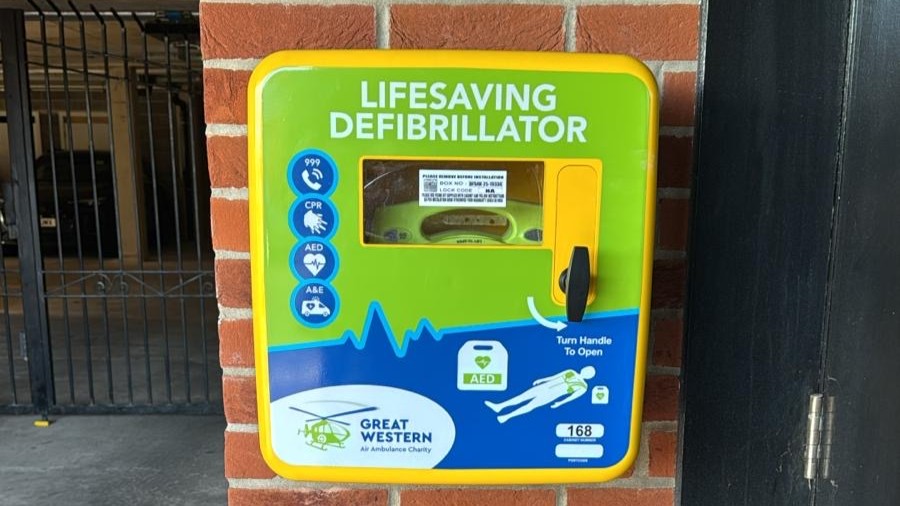
Unlocked defibrillators save lives.
For every minute without defibrillation, a patient’s chance of survival drops by around 10%.
We strongly encourage the use of publicly accessible, unlocked defibrillator cabinets to give every person the best chance of survival in an emergency.

Why accessibility matters in emergencies
Every minute counts when someone is suffering a cardiac arrest. In 2025, our Critical Care Team responded to 2,344 missions, including 525 cardiac arrests: our most frequent type of call-out.
Even with highly skilled specialist paramedics and advanced equipment, what happens before we arrive is crucial. Quick access to a public access defib can be the difference between life and death.
Unlocked defibrillator cabinets remove barriers, ensuring anyone nearby can act immediately.

Simulation image
Addressing concerns about unlocked defibs
We understand that leaving a public access defib cabinet unlocked can feel worrying. Concerns about vandalism or theft are common and we take them seriously.
Here’s how we assess the risks of leaving a defib cabinet unlocked:
- Local authority and police reports: we check for any reports of vandalism or theft in the area.
- Community input: we ask neighbourhood committees, community centres and residents’ associations for insight.
- Existing defibrillator data: we review registries like The Circuit to see if nearby defibs have experienced damage or theft.
- On-site observation: we assess the area’s visibility, lighting and foot traffic, and signs of past damage to public equipment.
- Consulting local businesses: we ask nearby shops and facilities if they have noticed repeated incidents of vandalism.
Our approach:
- Low-risk areas receive unlocked cabinets.
- Higher-risk areas may use a semi-unlocked cabinet with a code, balancing security with quick access.
Evidence and authority: why unlocked defibs work
Unlocked public access defibs are supported by national guidance and real-world experience.
- Basic Life Support Guidelines from The Resuscitation Council UK (RCUK, 2025) recommends that defib cabinets should be unlocked and accessible 24/7.
- A consensus statement on AED Cabinets from Resuscitation Council UK acknowledges that vandalism is uncommon and that locking a cabinet does not guarantee protection. They also note that any additional security measures may create significant delays.
- Locked cabinets do not prevent theft or vandalism but can significantly delay access, reducing a patient’s chance of survival.

Even though Dr Tim Godfrey is a trained medical professional and familiar with defibrillators, it still took more than five minutes to access the device. For a member of the public, particularly someone who is distressed or unfamiliar with the process, retrieving a defibrillator from a locked cabinet could take significantly longer.
This delay is critical: every minute without defibrillation reduces a patient’s chance of survival by around 10%. The incident highlights how locked cabinets, even when well-intentioned, can slow access in emergencies where seconds matter most.
How we support you to keep defibs safe
We understand that moving to an unlocked public access defib may feel like a big step. That’s why we provide ongoing support and practical measures to help you manage it with confidence.
Our support includes:
- Regular checks: Our guardians carry out monthly checks to ensure the defibrillator and cabinet remain in good condition. We can re-lock if needed while assessing longer-term measures.
- Flexible security options: If your location is identified as higher risk, a semi-unlocked cabinet can be used to balance access and security.
- Guidance and advice: We assist with ordering replacements or offering advice if a defib is ever damaged or stolen.
- Training and awareness: We can offer CPR and defib sessions for anyone who works, lives or regularly visits the area.
- Identification and recovery: We will provide you with a defib sticker and tag to support identification and repatriation if the device is used by first responders.
- Insurance and liability: Public liability insurance is in place and we will assist with ordering and offering advice if the defibrillator is ever damaged or stolen. However, GWAAC would not be able to fund the excess for any claim under GWAAC’s public liability, theft & vandalism, or accidental damage insurances.
We’re here to support you every step of the way, so you can feel confident keeping your defib accessible when it matters most.
Take action: unlock your defib today
Keeping your public access defib unlocked can save lives when seconds matter. We encourage you to make it accessible today and trust that we will support you every step of the way.
What to do next:
- Unlock your cabinet to ensure quick access in an emergency.
- Contact us if you need guidance, advice or support with installation and monitoring.