Welcome to our newly refurbished Yate shop
December 4, 2025
Celebrating success at Air Ambulances UK Awards of Excellence 2025
December 5, 2025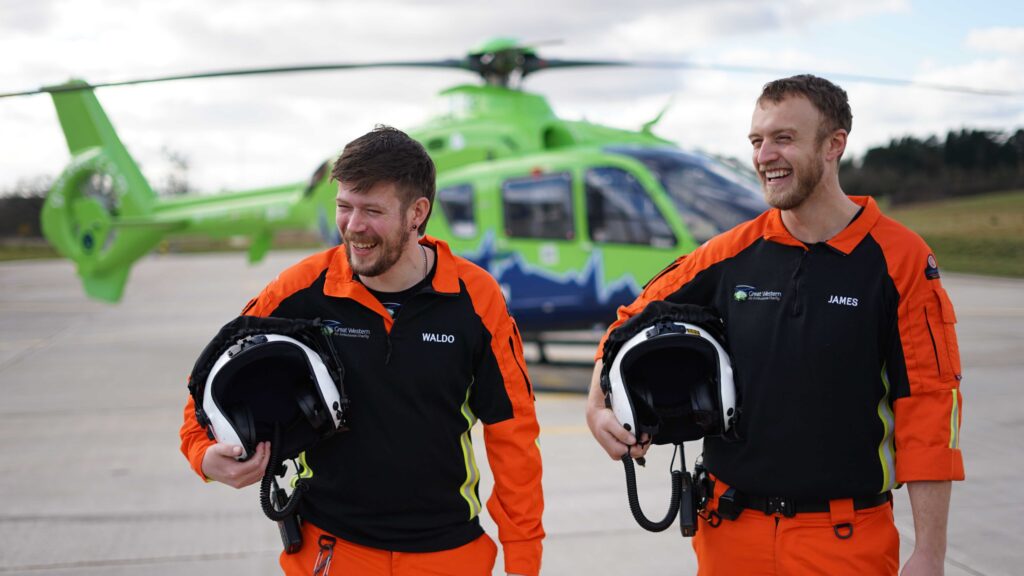
Featuring Waldo Zweep and James Leavor
Have you ever wondered what it’s like stepping into one of the most advanced pre-hospital care teams in the country? For Great Western Air Ambulance Charity’s (GWAAC) newest Trainee Specialist Paramedics in Critical Care (SPCC), Waldo Zweep and James Leavor, life has been full throttle since joining the crew in June 2024. They’re over halfway through their training and have been balancing intense study, simulations and missions with personal milestones — from snowy road rescues (“I’d never seen snow before”) to welcoming visitors at the airbase, and, for James, getting married and becoming a father.
We thought now would be a good time to reflect on the progress they’ve made so far and look ahead to their second year of training. Here are the milestones Waldo and James are working through on their journey to becoming fully qualified SPCCs:
Milestone one—securing the role
Waldo and James faced a tough selection process to get their trainee roles at GWAAC. Out of 140 applicants, they made it through to the Selection Day at our airbase and then on to the final interview stage before learning they would be joining our Critical Care Team.
When reflecting on the day, James said, “Selection Days don't come around that often and when they do, it's big news in the paramedic world. Lots of paramedics put in a lot of time and effort with the aspiration of joining a Critical Care Team. These days allow some to demonstrate the years of training and learning, and show how you could apply yourself to the role.”
Ahead of Selection Day, applicants were whittled down to just ten. On the day itself, they faced a written exam, followed by a series of clinical scenarios, team building exercises and a fitness test. If you’d like a closer look at what that day entailed, have a read of our blog post: ‘Being selected as a Trainee SPCC: The start of the journey’
Milestone two—first shifts
During their first couple of weeks as members of the crew, our newest recruits were tasked with familiarising themselves with the team, initially observing and learning during call-outs, before being given more responsibility over time. The level of responsibility given to Waldo and James would increase more over a period of roughly a year. This means that as the pair train more, they are given more opportunities to carry out procedures and get stuck in, whilst always working with a fully qualified SPCC or Advanced Clinical Practitioner in Critical Care (ACP-CC). After a year they would then be ready for Milestone four.
In between missions, they continually train and complete simulations with their colleagues. They’re also building their portfolios, which are detailed records of their studies and evidence gathered over two years, which must be completed to become fully signed off SPCCs.
During their first shifts, the pair experienced flying in Helimed 65 for the first time. As part of their early reflections on life as trainees, Waldo admitted he’s not the biggest fan of flying (not exactly ideal when working your first shifts at an air ambulance charity). “One of my first flights involved us going over the estuary — twirly power lines everywhere, poor visibility, and terrain that made us climb to scout a way out. I trust our pilot 100%, but yeah… terrifying.”
For James, aviation is a new but exciting frontier. A former Hazardous Area Response Team (HART) paramedic with experience in major incidents, technical rescues, and high-risk environments, he said he’s thrilled to now be providing critical care interventions himself. “GWAAC is known for its high clinical standards. Being part of this team is a dream. I’m learning from the best.”
Milestone three—learning to fly – literally!
As part of their training to become SPCCs, Waldo and James also had to complete the Helicopter Emergency Medical Services (HEMS) Technical Crew Member (TCM) course earlier this year — an intense two-week programme that includes everything from aviation law to meteorology, landing site identification, and emergency navigation.
HEMS TCMs need to be on board when landing at unsurveyed sites, such as roads, fields or beaches. These landings are common near emergency scenes and the TCM sits alongside the pilot to spot any hazards that could obstruct the helicopter landing. Waldo says, “I thought switching from aviation mode to paramedic mode at scene would be hard, but it actually came naturally. That transition, that rhythm, is surprisingly smooth.”
Of course, nothing comes without challenges. “Aviation is full of acronyms,” Waldo laughs. “My favourite is FLI — First Limit Indicator. We even have acronyms that explain other acronyms!”
But the perks? “The scenery. Seeing our region from the air gives you such a better understanding of the area we serve. It’s beautiful up there — when it’s not freezing!”
To learn more about this unique yet vital course, you can read our blog post all about it: Trainee SPCCs complete Technical Crew Member course’
Milestone four—logging progression and entering the rota
While clinical learning is exciting, there are trickier parts too — for Waldo, that’s the admin!
“The Excel spreadsheet is my nemesis,” Waldo jokes.
Both Waldo and James are juggling training portfolios, advanced clinical modules and heaps of documentation to evidence their progression. These logs are the basis of their training and must all be in place to eventually qualify. Each portfolio must be signed off by a member of the Critical Care Team and demonstrate that the Trainee has completed a required number of procedures.
After accumulating enough experience and evidence, trainees can join the rota without a fellow SPCC or ACP-CC working with them. Waldo hit this milestone in June, with James having recently joined him at this milestone. It means they can now take shifts as the only paramedic, with a Critical Care Doctor alongside them. From there, it usually takes about a year more of portfolio work and evidence gathering to officially become a fully qualified SPCC.
Waldo speaks candidly about the cultural shift from being a clinical leader in South Africa to learning how to gel with a new team as a Trainee. “It’s not just about medicine — it’s about people. I’ve learned that sometimes I’m the puppy, and sometimes I’m the person. It’s about knowing when to lead, when to listen, and how to get the best out of everyone.”
Milestone five—qualifying as a GWAAC SPCC
When James and Waldo become a GWAAC SPCC it will be the product of two years of incredibly hard work and the pair will rightly celebrate this huge achievement.
To become a fully qualified SPCC, James and Waldo will need to meet both GWAAC and South Western Ambulance Service Foundation Trust (SWASfT) specifications.
As SPCCs, they will be able to respond to call-outs on their own, without having other members of our crew working alongside them. This can come in handy when there are multiple SPCCs working during the same shift, as it means they can split up and respond to different call-outs at the same time. As a qualified SPCC, James and Waldo will both be able to administer blood transfusions and perform a selection of surgical interventions.
When looking ahead to the prospect of becoming a fully qualified SPCC, Waldo says, “I’m excited — not scared. I want the crew I work with to feel confident when I’m signed off.”

Trainee SPCCs James and Waldo

Trainee SPCC James being assesed during Selection Day
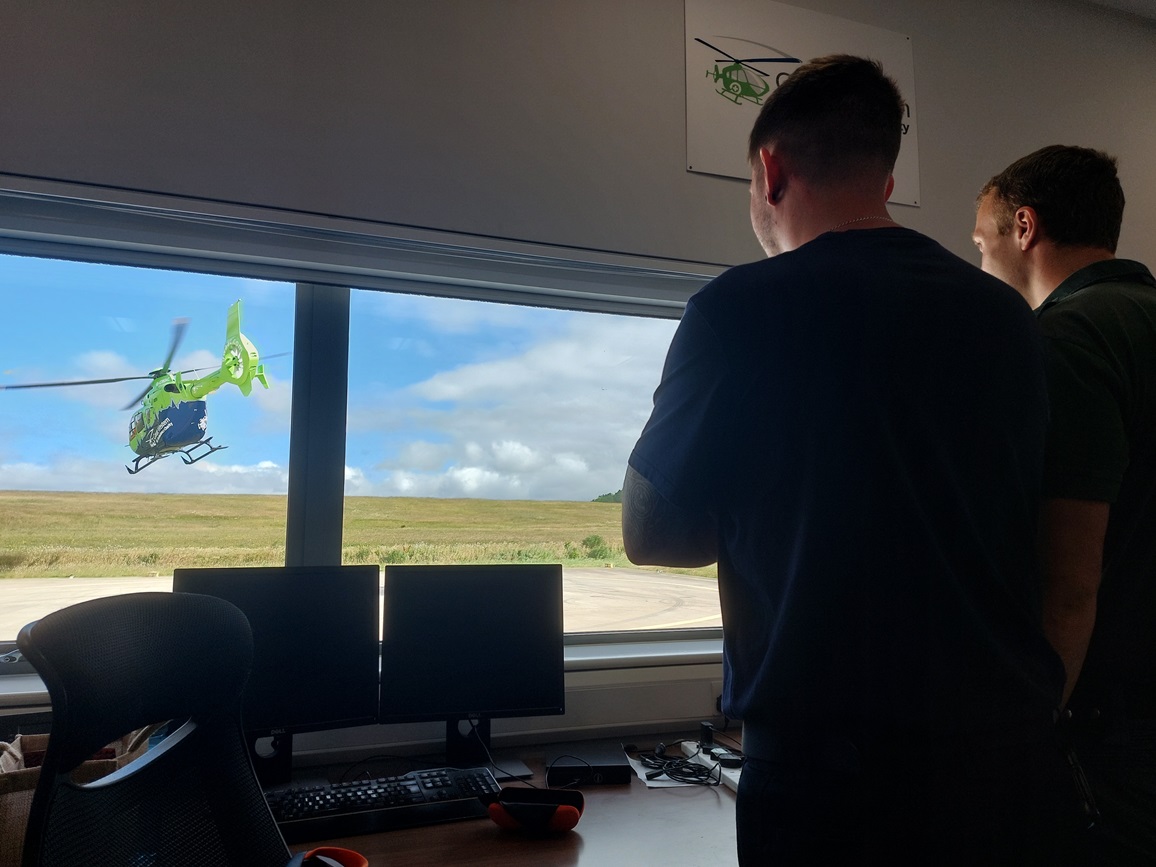
James and Waldo watch on as Helimed 65 takes off
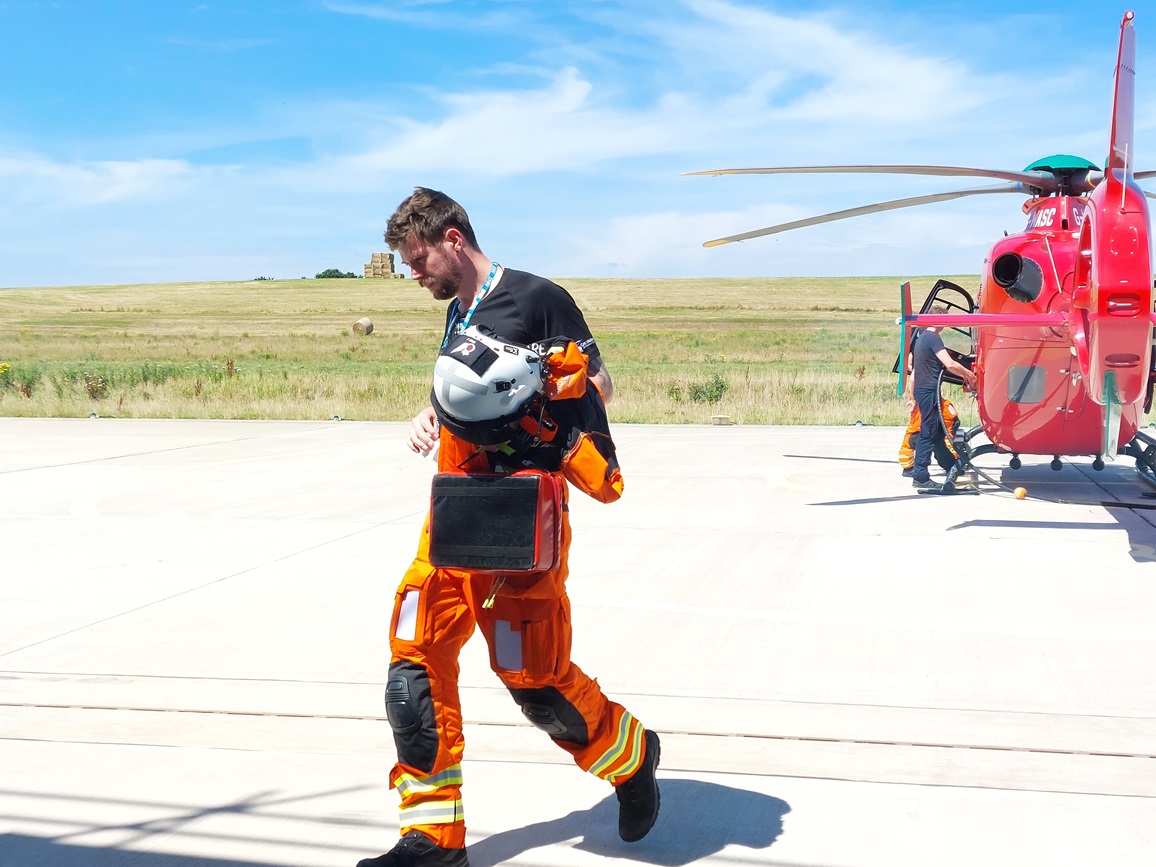
Trainee SPCC Waldo arrives back at base following his first helicopter call-out
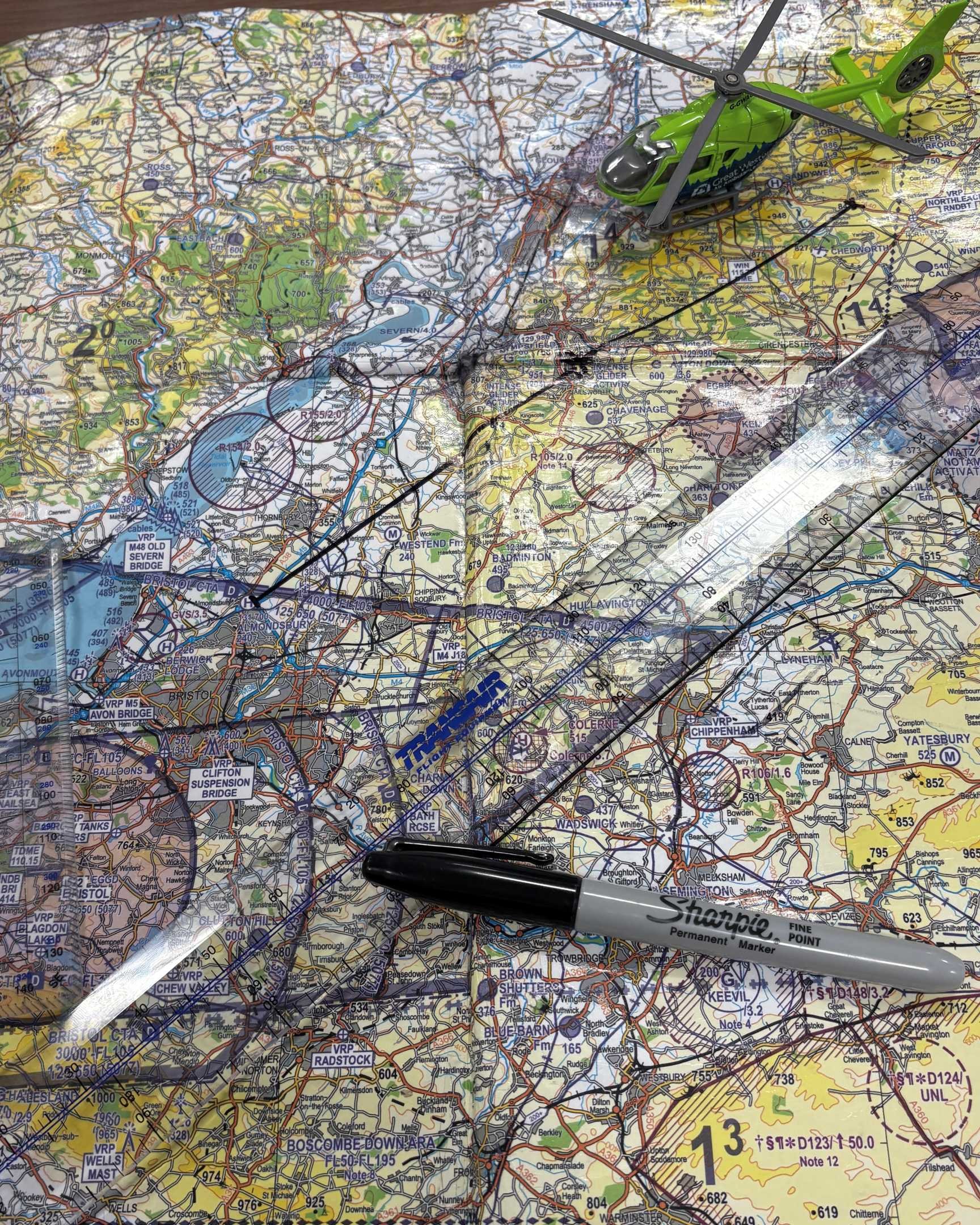
During their TCM training, James and Waldo were taught about navigation and route plotting
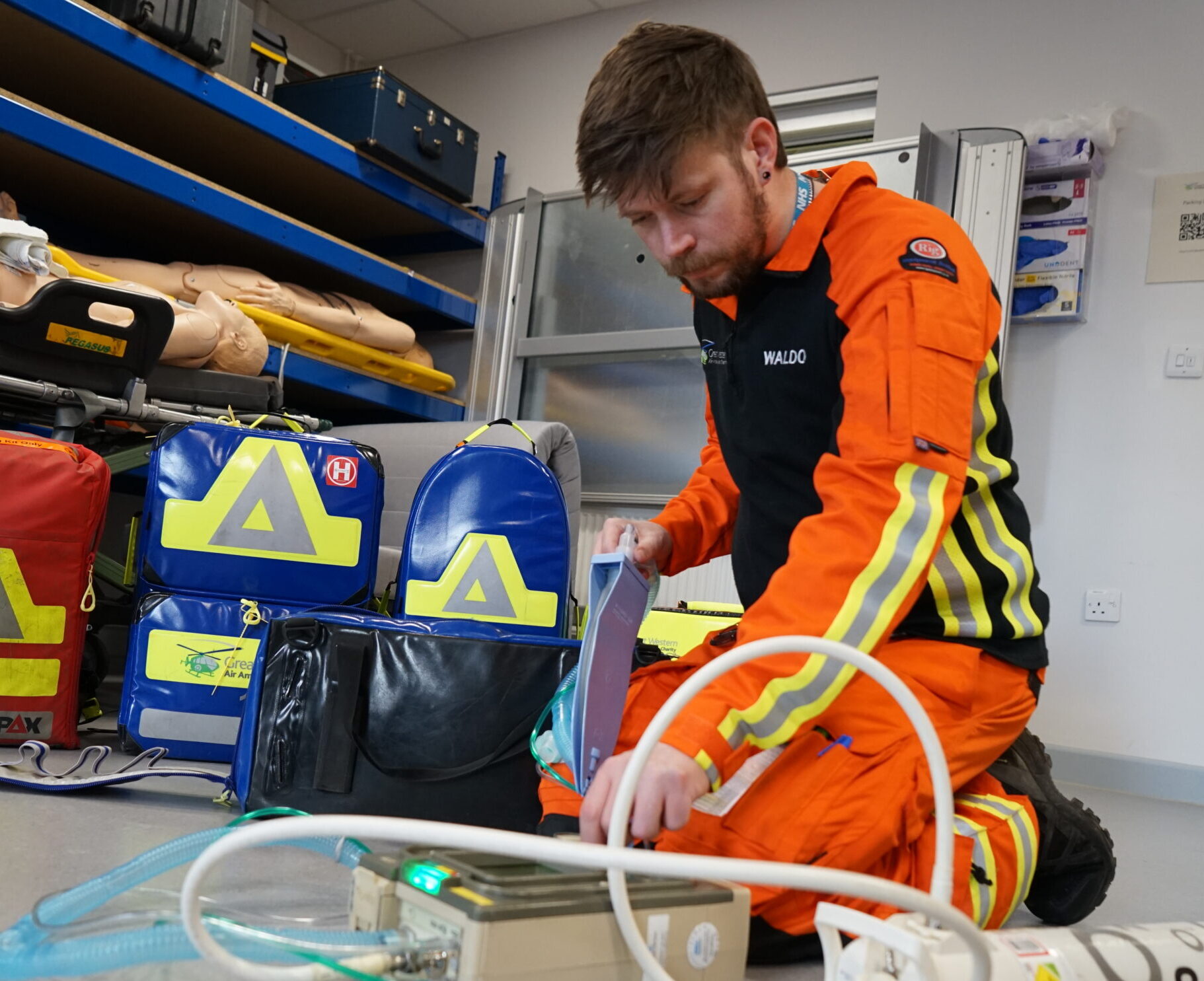
Trainee SPCC Waldo training with a ventilator
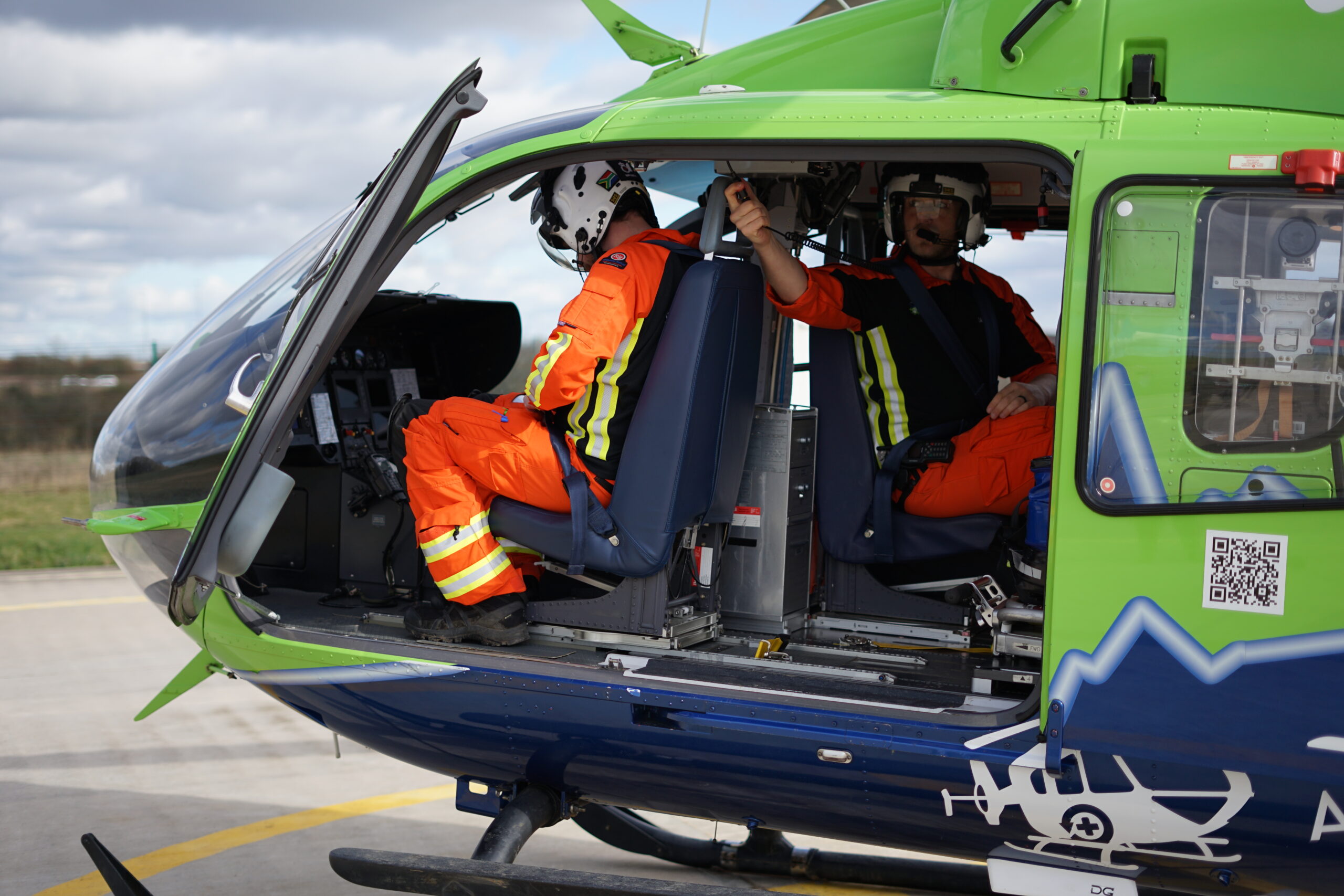
James and Waldo on board Helimed 65